
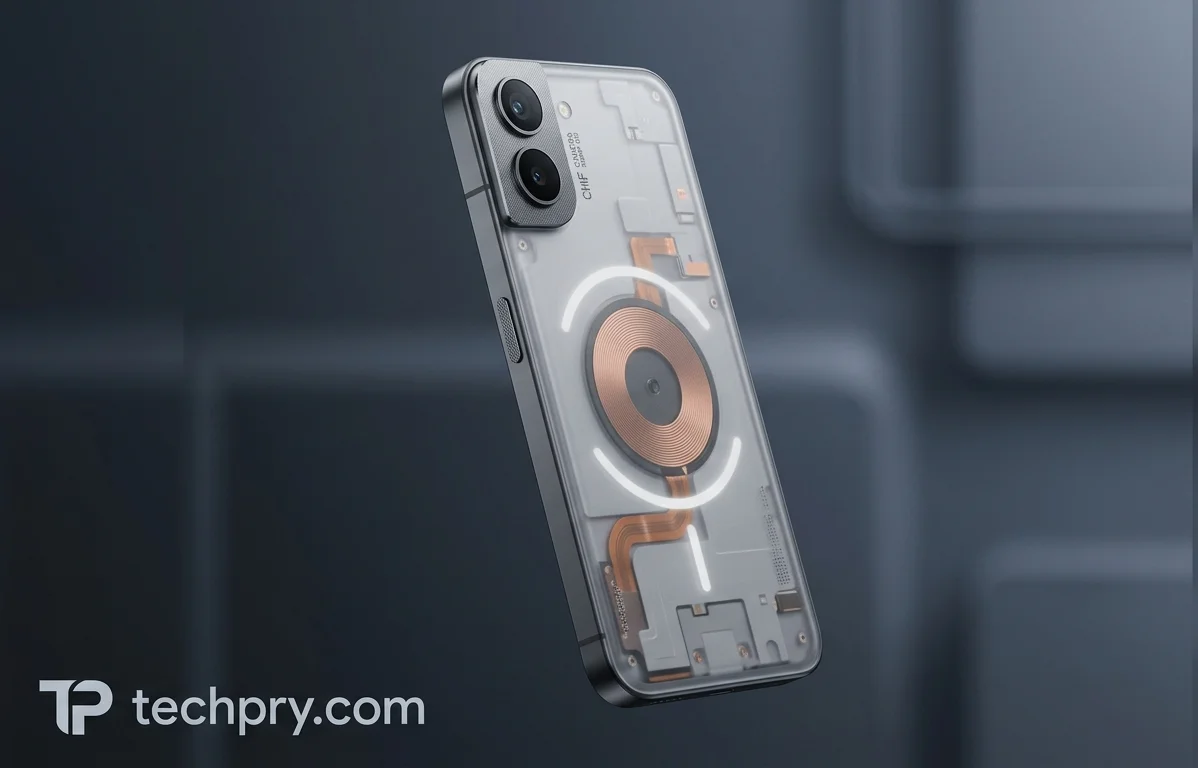
Nothing CMF Phone 2 Pro: Strong Battery and Screen, Slow Charging and Screw-On Accessories
The screen and battery each draw praise from three of the four reviews, while slow 33 W charging with no charger in the box is the compromise most likely to affect daily use.
Contents
- How good is the 6.77-inch, 120 Hz display?
- Is the screen bright enough in direct sunlight?
- How long does the 5,000 mAh battery last?
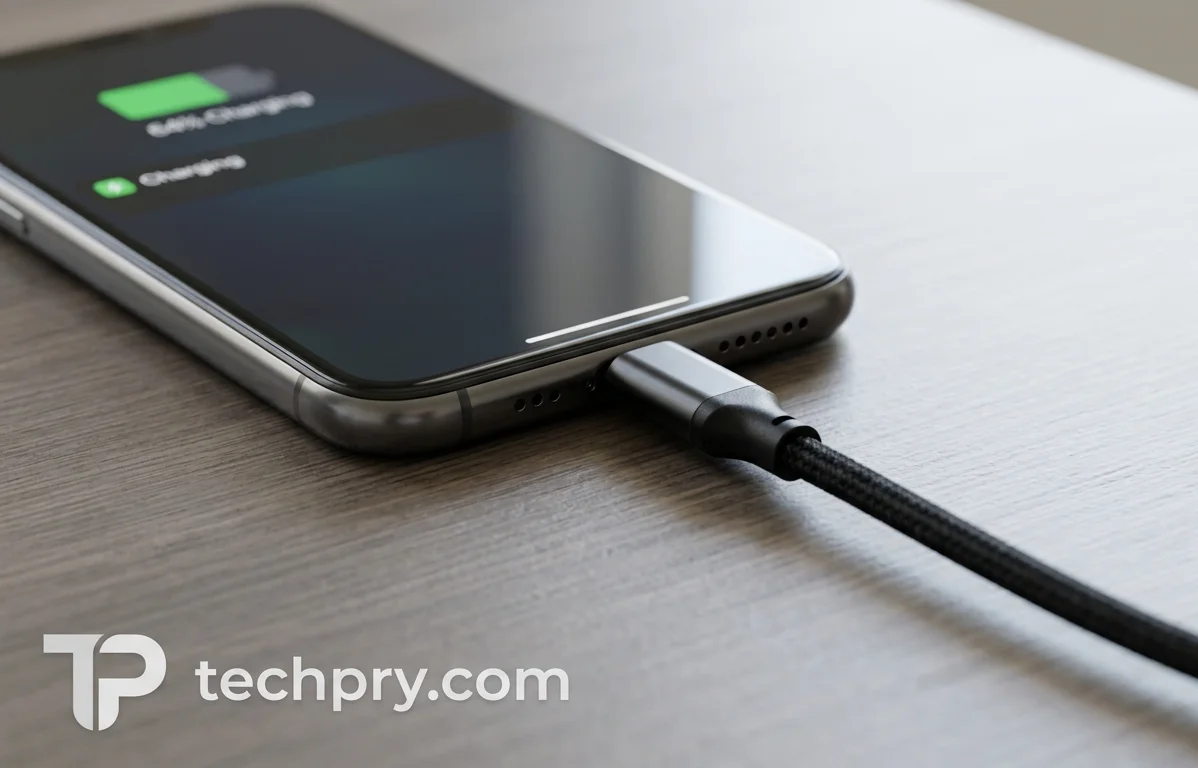
- Is 33 W charging fast enough, and what about wireless or reverse charging?
- Design: exposed screws, bold colours and a look that stands out
- How do the screw-on, modular-style accessories work?
- Which accessories are worth buying: clip-on lenses, lanyard or kickstand-card wallet?
- What are the trade-offs of the fixed back cover and the tiny screws?
- Build quality, durability and in-hand size: plastic body, tougher front, 185 g
- Everyday performance and gaming: smooth for daily use, limited for demanding games
- What the chipset, CPU and GPU actually are
- Benchmark scores: processor, graphics and system tests
- Software and updates: how clean the interface is and how long support lasts
- The Essential shortcut button and its experimental AI
- How good are the cameras in real use?
- Rear camera hardware: 50 MP main, 50 MP telephoto and 8 MP ultrawide
- Video recording: 4K at 30 fps, 1080p at 60 fps and no 8K
- Selfie camera: 16 MP with competent results in good light
- What's in the box: no charger, but a cable and a clear case
- RAM, storage options and memory card expansion
- Is it a good budget phone? The verdict and the value case
- What the Pro changes from the first CMF phone
- Audio and haptics: mono speaker, no headphone jack and refined vibration
- Fingerprint scanner, side keys and sensors
- Release date and price: announced April 2025, $249 at launch
- Connectivity: wireless standards, USB-C, contactless and positioning
- SIM slots and network support: two Nano SIMs and 5G
- Who the phone suits, and who should skip it
The CMF Phone 2 Pro sells for $249 and puts its personality on the outside: screws left visible on the back and a mount for screw-on accessories, a look Visermark calls far more expressive than the average budget phone. Its other draw is endurance, with three of the four reviews praising the 5,000 mAh battery. The catch comes on the way back to full: two of the four call 33 W charging slow by 2025 standards, and two regret that the box holds a cable but no charger. That trade, long stamina against slow top-ups, is what to weigh before the styling does the persuading.
How good is the 6.77-inch, 120 Hz display?
Three of the four reviews praise it, and the specs explain why.
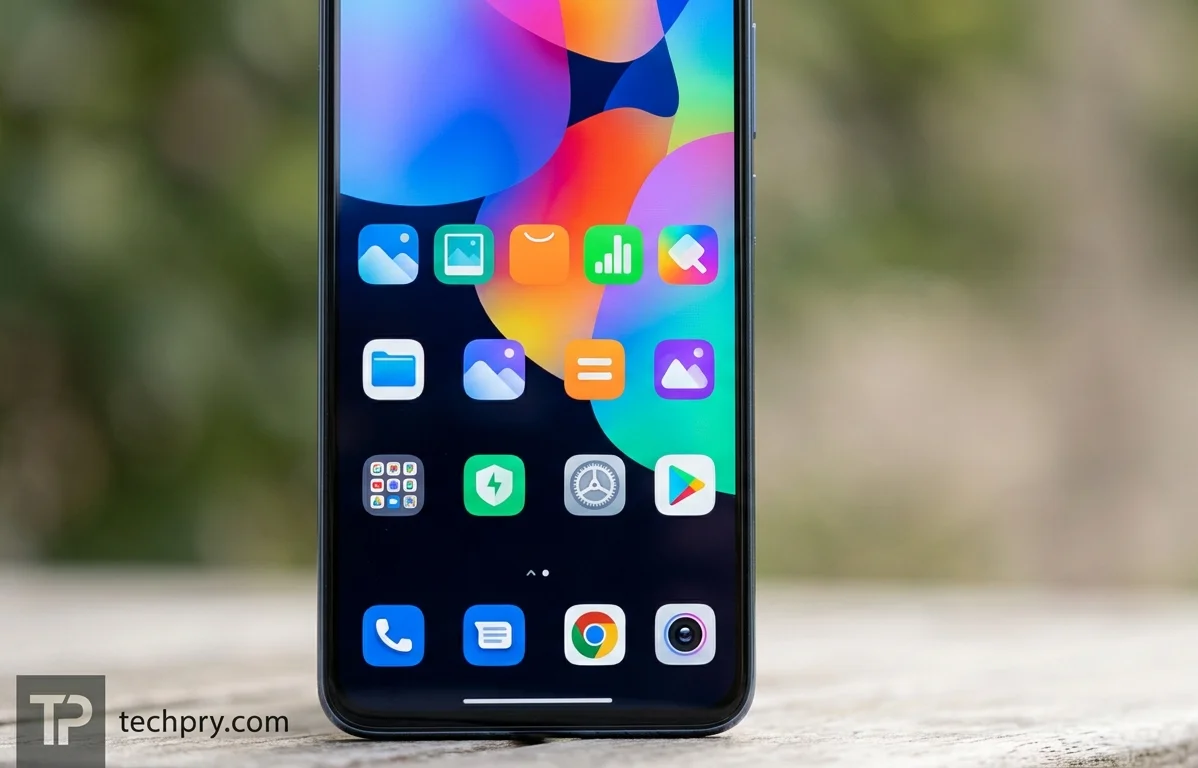
The panel is a 6.77-inch unit (some listings round that to 6.8 inches) at 1080 x 2392 pixels, which works out to 388 ppi on a 20:9 screen. The refresh rate adapts between 60 and 120 Hz, and touch sampling runs at 480 Hz. On the colour side it lists 10-bit colour, support, DCI-P3 and DC Dimming, plus an . It is a flat panel with slim bezels, and the screen-to-body ratio is 86.5%, although PhoneArena lists 86.68%.
The praise is specific. The Times of India calls the screen big, vivid and bright; Visermark describes rich colours, deep blacks and enjoyable content consumption, with a viewing experience that beats what the price would lead you to expect; and GSMArena notes a panel that is bigger and brighter than its predecessor's, with 10-bit colour and HDR10+. Sharpness at 388 ppi and the adaptive 120 Hz refresh cover the two things most people notice first, which leaves outdoor brightness as the one place to check.
Is the screen bright enough in direct sunlight?
Not reliably: it holds up indoors and in shade, but visibility suffers in direct sun, according to Visermark. The panel is rated at 1300 nits, with 3000 nits quoted for HDR content. Measured figures sit a little under the rating, at 1250 nits in an auto-brightness peak test and 1207 nits at 20% APL, which PhoneArena classes as Average, and PhoneArena gives the minimum brightness as 2.2 nits, also Average.
The HDR figure applies to HDR content, so the everyday ceiling to plan around is the 1,200 to 1,250 nit range that Visermark found fine in shade and not enough under direct sun. Only one of the four reviews raises sunlight at all, which makes this a single, specific warning rather than a consensus, but anyone who works or commutes outdoors in strong light should weigh it.
How long does the 5,000 mAh battery last?
Through a full day for most people, according to three of the four reviews. The Times of India says the battery easily lasts over a day, Visermark describes consistently excellent endurance, and a Nothing Community tester averaged about 8 to 10 hours of use per full charge, from sunrise to sunset, with Wi-Fi and the Always-On Display switched on and a mix of YouTube, social media, notes, camera testing and gaming. That is a busier workload than casual use, so the figure is more useful than a bare claim of lasting over a day.
The cell is a Li-Po pack that is not user-replaceable, rated at a minimum of 4,920 mAh against the nominal 5,000.
The published battery tests disagree with each other:
| Test | Spec-sheet figure | PhoneArena |
|---|---|---|
| Web browsing | 10:12 h | 14h 19min |
| Video playback | 16:34 h | 13h 27min |
| Gaming | 5:59 h | 11h 58min |
| Other figures | Standby 153 h; general battery life 28:32 h | Overall estimate 7h 55min |
Gaming shows the widest gap, with PhoneArena recording about double the spec-sheet runtime, while browsing and video split in opposite directions. Because the gaps do not run one way, treat each set as a range rather than a promise. The Nothing Community tester's 8 to 10 hours of mixed, fairly heavy use is a more realistic planning figure for a busy day, since it sits between the two gaming results and at or below the browsing and video numbers.
One cost sits in the panel. It is not , so the Always-On Display runs at 30 Hz, which the same tester says consumes a little more power. The 8 to 10 hour result was recorded with that feature on, so switching it off is the obvious lever for anyone chasing more hours.
Is 33 W charging fast enough, and what about wireless or reverse charging?
By 2025 standards, no: two of the four reviews call 33 W slow or limited, and the Nothing Community tester adds that almost all competitors charge faster.
Wired charging peaks at 33 W. The spec lists 46% in 30 minutes and a full charge in 1:25 hours, and the Nothing Community tester measured 80 to 100 minutes for 0 to 100%, so the real-world result brackets the listed one. The brand's own claim, as Visermark reports it, is 50% in just over 30 minutes.
There is no , which The Times of India notes with disappointment, and tops out at 5 W. The Nothing Community post also records reports of slow and highly varying charging speeds on some devices, which Nothing's team is testing and working to fix, so it is worth checking that before judging the phone by a single slow charge.
A full charge in 1:25 hours is not unusable, and the complaint is relative to rivals. It stings more because the phone ships without a charger, and since charging peaks at 33 W, a brick rated higher buys you nothing. At 5 W, reverse charging is a modest convenience rather than a feature to plan around.
Design: exposed screws, bold colours and a look that stands out
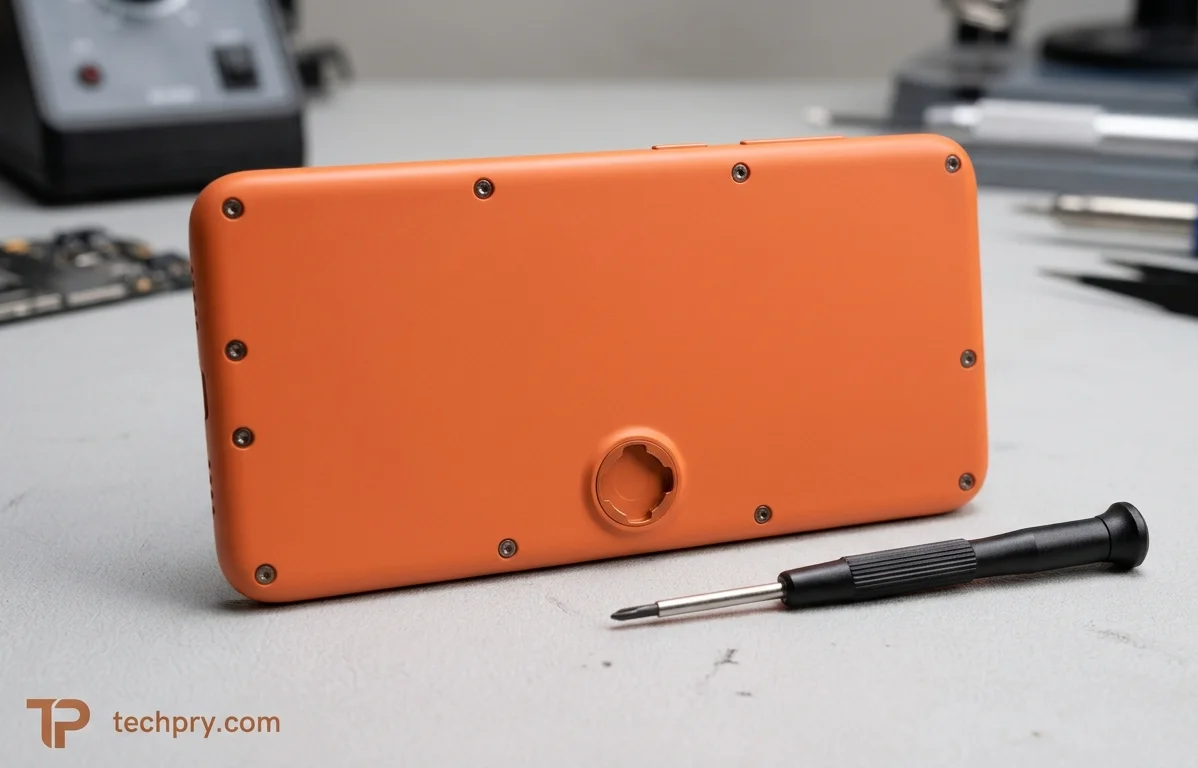
The look is built around an attachment point and exposed screws on the back. GSMArena calls these the brand's signature elements and says the result stands out, while Visermark credits the industrial styling and bold colours with making the phone far more expressive than the average budget phone. That is two of the four reviews enthusiastic about the design.
Colours are White, Black, Green and Orange, and Visermark also mentions blue, which the spec does not list. GSMArena says the design is very similar to the original . The visual identity is therefore continuity; the meaningful differences from the earlier phone sit in the hardware and in the fixed back, both covered further down.
How do the screw-on, modular-style accessories work?
Unscrew the back and you can attach accessories such as camera lenses, a kickstand-card wallet or a lanyard. The system rests on two parts, a round mount at the bottom and a universal cover that screws onto the back, and the cover carries a that keeps accessories firmly attached. The accessories are sold separately, and an extra set of screws comes with the universal covers.
Modular is a generous word here. The display, battery and rear cameras are not modular, so this is a customisation system rather than a repairability one. Two of the four reviews like it anyway: The Times of India grants that these are not the fully modular phones once dreamed of but calls them the most practical, playful concept it has seen in years, and Visermark says the system gives a sense of personalisation not commonly found at this price. Because the accessories cost extra, the feature that gives the phone its character will cost more than the sticker price once you start adding to it.
Which accessories are worth buying: clip-on lenses, lanyard or kickstand-card wallet?
The clip-on lenses carry the most weight. Nothing sells a two-lens pack with a and a , which together bring the phone to five lenses in total. The Times of India's favourite is the macro lens: it shoots at the phone's full 50 MP resolution and captures detail the reviewer says is not seen on other budget phones, whereas budget phones usually fake macro with low-resolution ultrawides or tiny sensors.
That point lands harder next to the built-in cameras, because the phone's own ultrawide is 8 MP and Visermark finds its images soft and low in contrast even in daylight. For close-ups, the clip-on route sidesteps that softness, though it rests on a single reviewer's impression.
The lanyard is Nothing's only other own-brand accessory, and the same reviewer enjoyed roaming hands-free with it despite a few curious glances. The kickstand-card wallet is the weak link: the reviewer is not a fan, calling it generic, with dozens of similar cases already on the market.
What are the trade-offs of the fixed back cover and the tiny screws?
Unlike the CMF Phone 1, the back cover cannot be swapped, and if it breaks the fix is a repair-shop visit. Nothing says it dropped the removable backplate to make the phone thinner and more water-resistant, and The Times of India has mixed feelings about that trade. The thinness and resistance claims fit the 7.8 mm body and water-resistance rating covered under build quality below.
Day to day, the sore spot is the hardware: the screws are tiny, the minuscule screwdriver with a SIM-ejector pin on its other end does not help, and the screws are easy to lose. You handle them every time you change an accessory, which is why a spare set comes in the universal-cover packs. The same reviewer says unscrewing the back was the one thing worth complaining about after several days. How much that matters depends on how often you plan to swap: occasional changes are a minor chore, frequent ones are real friction.
Build quality, durability and in-hand size: plastic body, tougher front, 185 g
Two of the four reviews find the build solid. GSMArena says the phone is more durable than its predecessor thanks to on the front and an rating, while Visermark describes a solid feel with a flat frame and a textured rear that gives decent grip. The back and frame are plastic, which GSMArena says comes with pros and cons.
IP54 is a rating aimed at everyday splashes and dust, so Nothing's promise that the phone should survive up to 20 minutes in up to 25 cm of fresh water is better read as protection against accidents than as permission to take it swimming.
The phone measures 164 x 78 x 7.8 mm and weighs 185 g, although Visermark gives the thickness as 8.1 mm. Visermark says the weight gives it a reassuring presence in the hand without feeling cumbersome. With a 6.77-inch screen, this is a large phone, and the 78 mm width is the figure to check against your own hand.
Everyday performance and gaming: smooth for daily use, limited for demanding games
Daily use feels smooth, and demanding 3D games are where the chipset runs out of room. Two of the four reviews describe everyday performance as smooth: The Times of India says it has been smooth so far, and Visermark reports responsive multitasking, quickly loading apps and fluid switching between them. Visermark adds that light gaming is possible, but graphically demanding titles will show the chipset's limitations.
The Nothing Community battery tester played mostly BGMI, with some Genshin Impact and Asphalt, during its 8 to 10 hour test, but reports battery results rather than frame rates, so Visermark's caution is the clearest read on heavy games. The chipset details and benchmark scores below give the numbers behind that verdict.
What the chipset, CPU and GPU actually are
The processor is the , the Pro variant of the regular Dimensity 7300 used in the predecessor, built on a 4 nm process by TSMC. Its eight cores split four and four: four cores at up to 2.5 GHz and four Cortex-A55 cores at 2 GHz, backed by 4 MB of L3 cache. A MediaTek APU 655 handles neural processing.
Graphics come from the MP2 (one listing writes MC2), with 256 shading units at 1047 MHz and about 536.1 GFLOPS of compute throughput. Visermark credits the efficient chipset, together with the 5,000 mAh cell, for the endurance it saw.
Benchmark scores: processor, graphics and system tests
Where two sets of results exist, they land close together, which makes the CPU figures easy to trust. In , the spec lists 999 single-core and 2867 multi-core, while PhoneArena's own runs gave 1013 and 2936. The 11 total is 895,939, made up of 347,749 for the CPU, 125,925 for the GPU, 139,324 for memory and 282,941 for UX.
Graphics are harder to compare because the two sources ran different tests: the spec lists a 3DMark Steel Nomad Light score of 345 and a GPU compute score of 2509, while PhoneArena reports 3DMark High at 850 and Low at 844. A stress-test stability figure of 98% is also listed.
On PCMark, the spec lists 12041 overall, with sub-scores of 11279 for web, 5278 for video editing, 23499 for photo editing, 9970 for data manipulation and 17296 for writing. These numbers support Visermark's smooth-in-daily-use verdict and leave room for its warning about demanding games, since they describe a mid-range chip rather than a gaming one.
Software and updates: how clean the interface is and how long support lasts
The phone runs on top of ; the spec lists Nothing OS 4.0, while Visermark says 3.2.
Reviewers like the interface. The Times of India calls it great as usual, and Visermark describes a stripped-back, cohesive design with very little bloatware, clean transitions and an experience that stays intuitive even for less tech-savvy users, which makes two of the four reviews positive.
The update promise is consistent on one point and not on another. The phone gets 3 years of OS updates, which the spec and Visermark both state. The spec lists 6 years of security updates, while Visermark says four years of security patches are promised and calls the support commendable. If the longer security window matters to your decision, confirm the figure with Nothing before buying.
The Essential shortcut button and its experimental AI
A physical opens Nothing's AI-powered , which The Times of India notes is carried over from the pricier Phone 3(a) models. Visermark describes it as a small layer of AI for quick reminders and voice memos, finds the dedicated shortcut button genuinely practical, and says the AI features feel more experimental than essential. That is one opinion out of four, but it suggests treating the button as the keeper and the AI as a bonus.
How good are the cameras in real use?
Good for the price, with clear weak spots. Two of the four reviews judge the system more versatile than the predecessor's and good enough for the cost: GSMArena points to the 50 MP telephoto and 8 MP ultrawide added to the mix, and The Times of India says the cameras need only be good at this price and are, though the colour algorithms could use fine-tuning.
Visermark gives the most detail. The main camera takes respectable photos in good light with decent colour balance and acceptable dynamic range, and portraits are handled fairly well, particularly with the multi-level focal distance modes. Low light is where it drops off, with visible noise, reduced detail and a general lack of clarity, and the ultrawide produces images that lack sharpness and contrast even in daylight.
PhoneArena's own camera test scores the phone 125 overall, 134 for photos and 116 for video. Read together, the praise is about versatility from the added lenses, while the criticism lands on the smallest-sensor lens and the hardest lighting.
Rear camera hardware: 50 MP main, 50 MP telephoto and 8 MP ultrawide
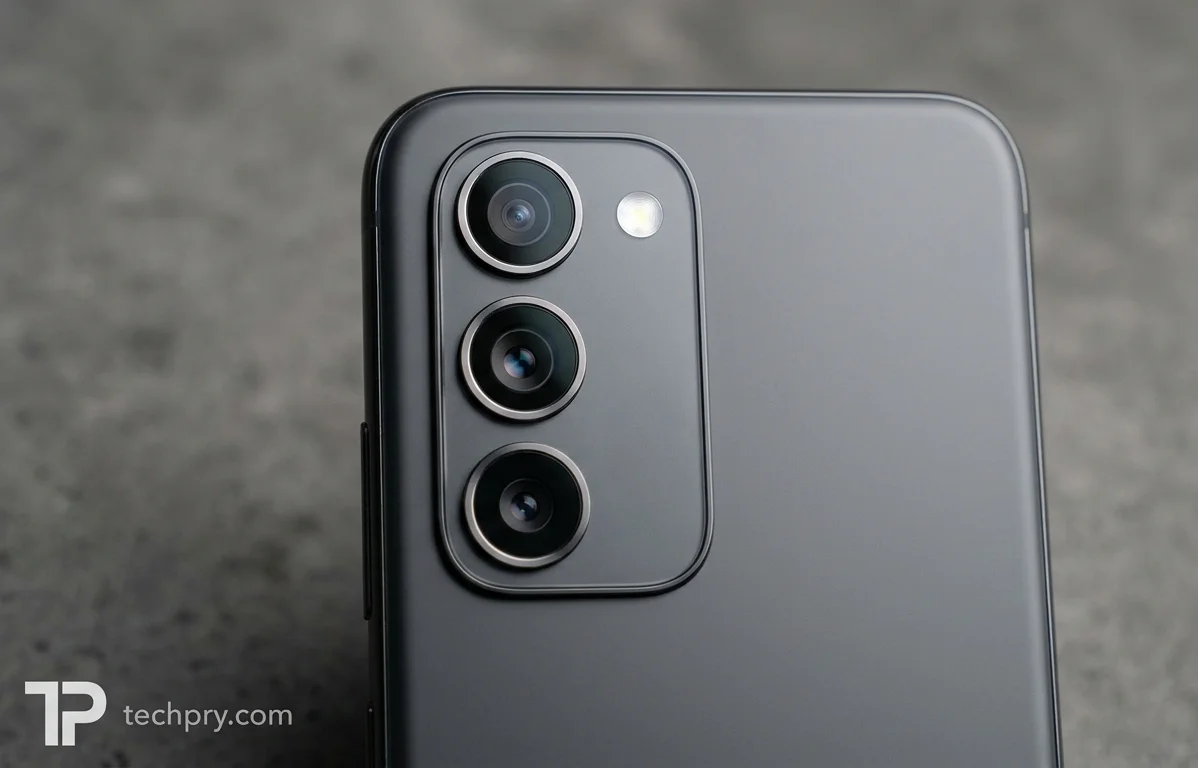
The rear is a triple camera: a 50 MP standard lens, a 50 MP telephoto and an 8 MP ultrawide.
- The standard lens uses a sensor, 1/1.57 inch with 1 micron pixels, at f/1.9 and a 24 mm focal length, and it focuses with dual-pixel phase autofocus.
- The telephoto pairs an sensor (1/2.88 inch, 0.61 micron pixels) with f/1.9, a 50 mm focal length and 2x optical zoom.
- The ultrawide is an 8 MP GalaxyCore GC08A8 (1/4.0 inch, 1.12 micron pixels) at f/2.2 and 15 mm, and the widest lens has a 120° field of view.
Stabilisation is digital on every lens, there is an LED flash, Bokeh and Pro modes are listed, and still images reach 8192 x 6144 from the main camera.
Two sources differ from the spec. PhoneArena gives the main aperture as F1.8 against the spec's f/1.9, and Visermark describes the system as a main sensor, an ultrawide and a macro sensor rather than a telephoto. GSMArena and PhoneArena both list the telephoto, so the macro description is most likely a mislabel. The sensor sizes also explain a lot: the main sensor is much larger than the telephoto's and the ultrawide's, which fits Visermark's softness complaint about the ultrawide.
Video recording: 4K at 30 fps, 1080p at 60 fps and no 8K
Video tops out at 4K at 30 fps, with 1080p available up to 60 fps and 240 fps slow motion at 720p; 8K is not supported. The front camera also records 1080p at 60 fps. Visermark calls the stabilisation passable but nothing more, which fits stabilisation that is digital on every lens, and PhoneArena's video score of 116 trails its photo score of 134. The phone is better treated as a stills camera first.
Selfie camera: 16 MP with competent results in good light
The front camera is a 16 MP GalaxyCore GC16B3 sensor (1/3.0 inch, f/2.0, 22 mm) with no autofocus and no depth sensor, and it records 1080p video at 60 fps. Visermark finds it competent in good lighting, but it struggles with edge detection in portrait mode and tends to soften details. Without a depth sensor, portrait cut-outs depend on software, which plausibly explains the edge problems.
What's in the box: no charger, but a cable and a clear case
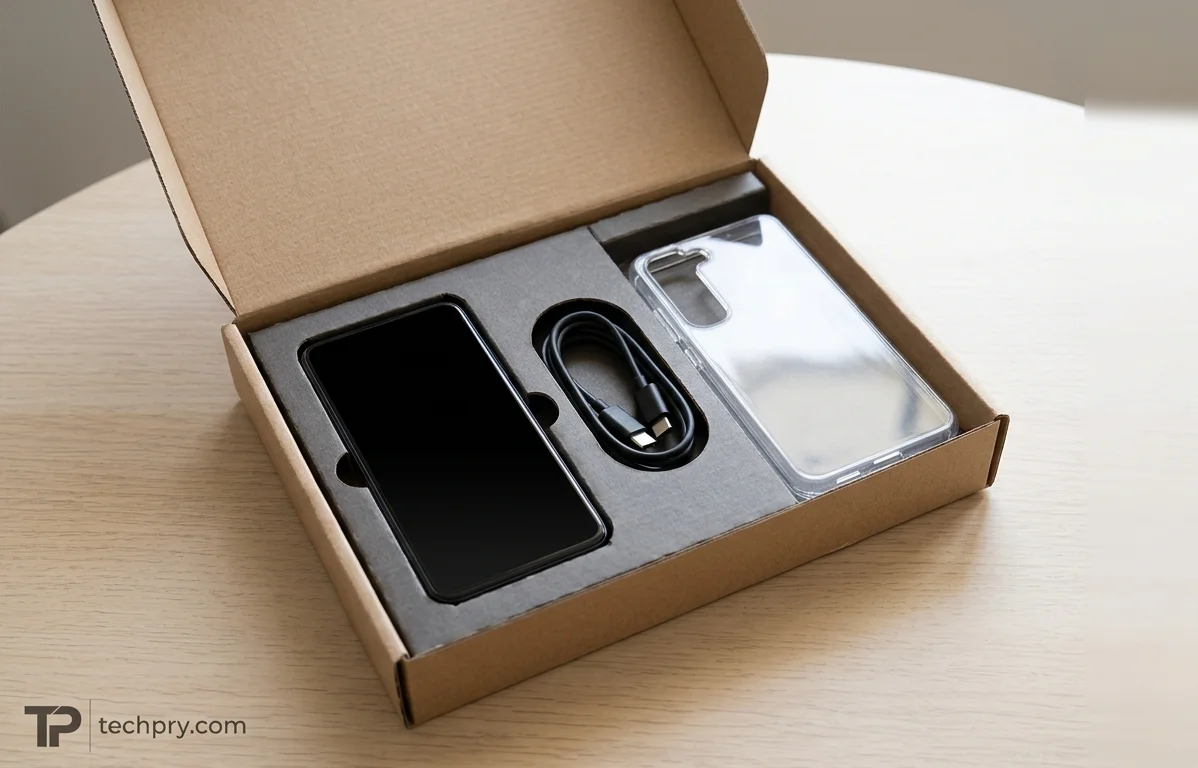
You get the phone, a basic Type-C to Type-C cable and a clear plastic case, and no charger. Two of the four reviews regret that: GSMArena and Visermark both flag the missing charger as a likely disappointment. The Nothing Community tester takes the opposite view and would rather buy a charger separately than pay for one bundled in. That post also says buyers in India get a charging brick and cable, which differs from the no-charger spec. GSMArena counts the bundled case as a plus because you can start using the phone immediately.
The phone ships in a thin sleeve-style cardboard box, nestled in a protective cradle, and all of the packaging, cradle included, is recyclable. GSMArena welcomes the recyclable materials but does not like how little material sits between the contents and outside threats.
RAM, storage options and memory card expansion
The phone has 8 GB of RAM clocked at 2133 MHz over two channels. Storage is in 128 GB and 256 GB versions, and a slot accepts cards up to 2048 GB.
The card slot is a selling point: two of the four reviews welcome it, GSMArena calling it crucial for many prospective buyers and Visermark praising the flexibility for users who need more space. Visermark also calls the 256 GB of onboard storage a standout at this price. In India, the 256 GB version costs ₹20,999 against ₹18,999 for 128 GB.
Two details conflict. The spec lists 128 GB, while Visermark describes its reviewed unit as 256 GB, and Visermark calls the SIM slot hybrid where the spec says there is no hybrid slot. If the spec is right, a second SIM and a memory card can coexist; if Visermark is right, you would have to choose, so confirm before buying if you need all three.
Is it a good budget phone? The verdict and the value case
Yes, according to the two reviews that give an overall verdict. The Times of India calls it a well-done budget phone and says it rarely felt like complaining beyond the tiny screws, and Visermark describes a visually distinctive, well-performing, affordable handset with a large battery and generous storage that neither challenges premium flagships nor chases gimmicks. The spec files it under mid-range, so the label depends on who is asked, and the launch price is $249.
Weighing the evidence, the strengths that matter most are the ones used every day, and so are the weaknesses:
| Aspect | Reading | How many reviews |
|---|---|---|
| Display | Praised | 3 of 4 |
| Battery life | Praised | 3 of 4 |
| Accessories and customisation | Liked | 2 of 4 |
| Charging speed | Called slow or limited | 2 of 4 |
| No charger in the box | Regretted | 2 of 4 |
| Cameras overall | Good for the price | 2 of 4 |
| Low light, ultrawide and speaker | Weak | 1 of 4 each, all Visermark |
Charging speed and the missing charger hit every day, so they outweigh the camera and speaker complaints, which come from a single reviewer and affect narrower use cases.
What the Pro changes from the first CMF phone
The Pro is the second CMF phone and the sequel to the CMF Phone 1, and GSMArena says it mostly lives up to its name with quite a few upgrades.
| Area | Change |
|---|---|
| Design | Very similar to the CMF Phone 1 |
| Chipset | Dimensity 7300 Pro instead of the regular 7300 |
| Display | Bigger and brighter, with 10-bit colour and HDR10+ support, per GSMArena |
| Cameras | A 50 MP telephoto and an 8 MP ultrawide added, per GSMArena |
| Battery | The same 5,000 mAh pack, per GSMArena |
| Durability | More durable, per GSMArena |
| Storage | Card slot retained |
| Back cover | Can no longer be swapped |
| Price | Higher; The Times of India calls it a slight hike with slightly better specs |
The upgrades land in the display, cameras, durability and chip variant, and the cost is a higher price and the loss of swappable back covers. Anyone who valued interchangeable covers on the first model gives something up, while buyers who care about cameras and the screen gain the most. Battery and charging stay put, so the criticism of 33 W charging is a carry-over rather than a new fault.
Audio and haptics: mono speaker, no headphone jack and refined vibration
The spec lists a single mono speaker, while PhoneArena lists an earpiece plus multiple speakers. There is no 3.5 mm headphone jack and no FM radio, and the phone also lacks support. Visermark says the speaker gets loud enough for calls and podcasts but sounds metallic and lacks depth for music and video, calling the overall sound quality underwhelming, while it finds the haptics surprisingly refined, with subtle vibration feedback.
Only one of the four reviews covers audio, but the verdict matches the hardware. Plan on wireless earbuds for music and video, since there is no jack, and treat the haptics as a small bonus.
Fingerprint scanner, side keys and sensors
The spec lists an , and PhoneArena describes it as an optical in-screen sensor. Visermark calls it side-mounted, which conflicts with both, but says it performs reliably, with a placement that may be slightly awkward for users with larger hands. Since the spec and PhoneArena agree on an in-screen sensor, the side-mounted description is probably a slip, and the larger-hands remark deserves caution until you can handle one.
Volume control sits on the left, with a lock/unlock key and one other key on the right, which is plausibly the Essential Key, although no source says so. Listed sensors are proximity, gyroscope, accelerometer, ambient light and compass, plus the fingerprint sensor.
Release date and price: announced April 2025, $249 at launch
The phone was announced in April 2025 (PhoneArena gives April 28) and released in May 2025. The launch price is $249, although PhoneArena lists the 8GB/128GB model at $276 alongside €249.
| Market or version | Price |
|---|---|
| Launch price (MSRP) | $249 |
| Europe, 8GB/128GB | About €249 to €250 |
| India, 128 GB | ₹18,999 |
| India, 256 GB | ₹20,999 |
The Times of India puts the ₹18,999 price at about $250, so the sources agree on the price tier even where the exact MSRP differs. Reviewers note the price is higher than the CMF Phone 1's.
Connectivity: wireless standards, USB-C, contactless and positioning
- The phone supports (802.11 a/b/g/n/ac/ax), dual band, with MIMO, Wi-Fi Direct, hotspot and Wi-Fi Display.
- It has with LE.
- The USB-C port is USB 2 and handles charging, USB storage mode and OTG, but there is no DisplayPort output.
- is listed, although GSMArena says it is available on some markets for payments.
- Positioning covers GPS, GLONASS, Galileo and QZSS, and PhoneArena also lists BeiDou, A-GPS, Cell ID and Wi-Fi positioning.
- There is no infrared port.
In practice, USB 2 and no DisplayPort mean the cable port is for charging and basic data rather than driving a monitor, and Wi-Fi Display is the wireless alternative. NFC varies by market, so check your regional version before counting on contactless payments.
SIM slots and network support: two Nano SIMs and 5G
The phone takes two Nano SIMs in standby mode and has no support, so the two physical slots are the only way to run two lines. The spec lists no hybrid slot, although Visermark calls it hybrid. It supports 5G and falls back to the older networks:
| Network | Bands |
|---|---|
| 5G (PhoneArena's list) | n1, n2, n3, n5, n7, n8, n12, n20, n28, n38, n40, n41, n66, n71, n78 |
| 4G LTE | 1, 2, 3, 4, 5, 7, 8, 12, 17, 18, 19, 20, 26, 28, 38, 40, 41, 42, 48, 66, 71 |
| 3G UMTS | 1, 2, 4, 5, 6, 8, 19 |
| 2G GSM | 850, 900, DCS, PCS |
The band lists run broad, but a list cannot confirm coverage on your carrier, so compare it against your operator's required bands before buying, especially for 5G.
Who the phone suits, and who should skip it
It suits buyers who want a phone with visible character, a battery that gets through a day or more, a good screen and room to add storage, since reviewers praise the design, battery, display and card slot.
It is a weaker fit for these buyers:
- People who expect fast top-ups, because two of the four reviews call 33 W slow and no charger is included.
- Anyone who spends long hours in strong sunlight, given Visermark's warning about visibility in direct sun.
- Heavy mobile gamers and low-light shooters, given Visermark's findings on demanding games and night results.
- Owners who prized the swappable back cover on the CMF Phone 1, since this one is fixed.
- People who play music or video through the phone's own speaker, which Visermark finds metallic and shallow.
Comments 0
Please log in or sign up to comment.