
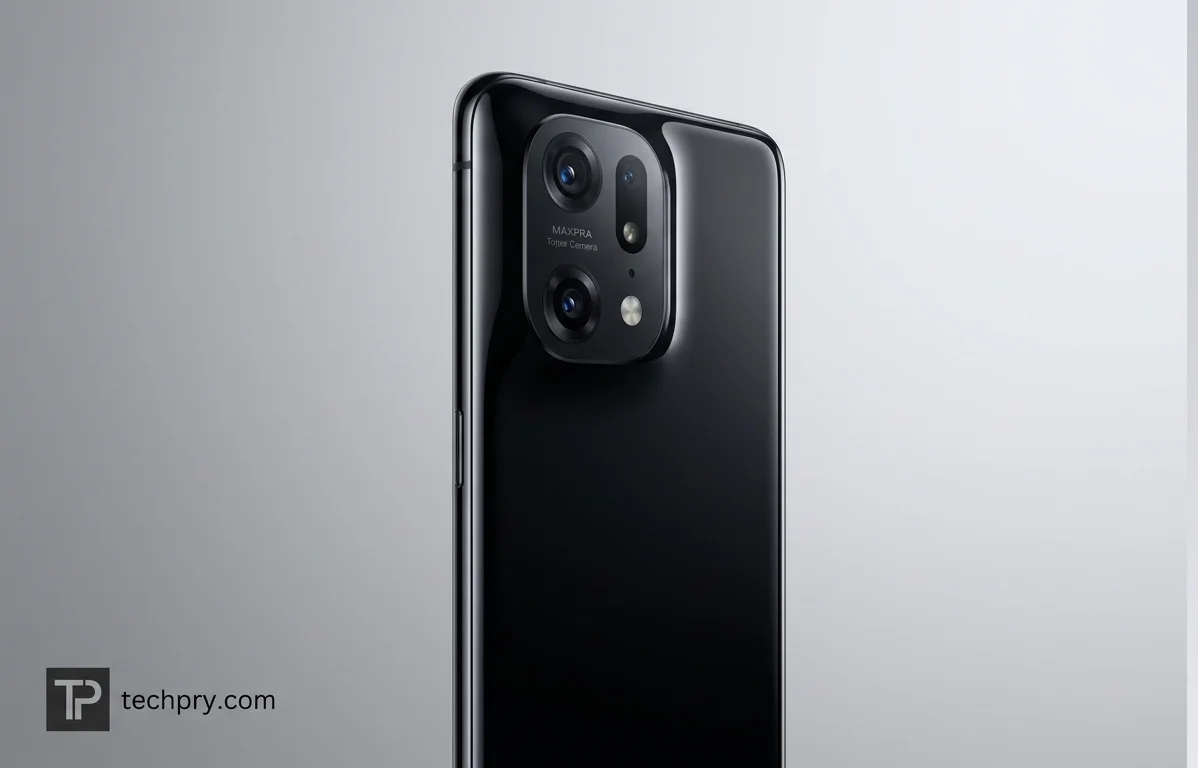
Oppo Find X10 Pro Max: Triple 200 MP Cameras, Regional Battery Gap and a High Price
The main camera's dynamic range and colour impress more than its 200 MP resolution, and battery capacity, storage and price all shift by region, so check which version you would really buy.
Contents
- Triple 200 MP rear cameras: billed as a first for any phone
- Main camera: a 200 MP Samsung sensor behind an f/1.5 lens
- Telephoto: 200 MP periscope with 3x optical zoom and 10 cm close focus
- Ultrawide: a 200 MP sensor behind a 124-degree autofocus lens
- Selfie camera: 50 MP with a wider 18 mm lens and 4K at 60 fps
- Image quality: excellent dynamic range and easy-to-like colour from the main camera
- Which main-camera resolution gives the best detail: 12.6 MP, 26 MP, 50 MP or 200 MP?
- Image processing and shooting modes: Hasselblad tuning, restrained processing and AI editing
- No dedicated camera button: the hardware shutter key has been dropped
- Video recording: 8K at 30 fps and 4K up to 120 fps
- Battery life: stellar endurance, but 8,000 mAh is not the capacity everywhere
- Charging: 80 W wired and 50 W wireless, with the charger in the box
- Price: $1,199 on the spec sheet, but €1,799 in Europe and Rs 1,99,999 in India
- Release date and availability: September 2026 launch and a Vietnam event on 28 October
- Performance: a 2 nm chip with efficiency-led gains and spec-sheet benchmark scores
- Upgrade value: improved in many ways, but not enough to force a switch
- Display: a flat 6.78-inch AMOLED with 1.15 mm bezels and a hidden light sensor
- Refresh rate, brightness and HDR
- Design and in-hand feel: great in the hand, standard in looks
- Dimensions, weight and build
- Colours: Luna White is the showpiece, Titanium Grey the quieter option
- Software: Android 17, five years of OS updates and six of security patches
- RAM and storage: fast memory, configurations that vary by market and no card slot
- Connectivity and audio: Bluetooth 6.2, USB 3.2, no headphone jack and no FM radio
- Network and SIM: dual Nano-SIM slots, embedded SIM support and 5G
- Fingerprint reader and sensors: ultrasonic in-display scanner, laser focus and spectral sensors
- Who this phone suits, and who should skip it
Three 200 MP rear cameras are the headline, yet reviewers' findings point to resolution as the least convincing part of the pitch. GSMArena found that 200 MP files added little useful detail, while it praised the main camera's dynamic range and colour. What decides the purchase may be the version on sale in your market instead. The spec sheet lists an 8,000 mAh battery and a $1,199 launch price, but PhoneArena reports that Europe gets a smaller 7,150 mAh cell and starts at €1,799, and it calls the price the phone's biggest drawback.
Triple 200 MP rear cameras: billed as a first for any phone
The main, periscope telephoto and ultrawide cameras all use 200 MP sensors, and the selfie camera is 50 MP. GSMArena presents the first-triple-200 MP status as Oppo's claim, while PhoneArena states it as plain fact. GSMArena adds a sharper qualifier: the 200 MP ultrawide is the part that had not been done before. That matters because the telephoto hardware is carried over from last year's X9 Pro and the main sensor is an upgrade from 50 MP, so the first-of-its-kind label rests on one genuinely new ultrawide and one resolution bump rather than three fresh cameras.
Main camera: a 200 MP Samsung sensor behind an f/1.5 lens
The main camera pairs an f/1.5 lens with a 1/1.3-inch Samsung sensor that has 0.6 µm pixels, optical stabilisation and an 84-degree field of view. Oppo says it co-developed the sensor with Samsung. Sources differ on two details: the spec sheet gives a 24 mm focal length while PhoneArena lists 23 mm, and 91mobiles calls the sensor 1/1.28-inch rather than 1/1.3-inch.
The comparison that matters is with last year. GSMArena notes that the jump from the X9 Pro's 50 MP sensor to 200 MP keeps essentially the same optical format, and the binned pixels come out at 2.40 µm against 2.44 µm. In plain terms, the extra resolution does not come with a bigger light-gathering surface, which fits GSMArena's finding that 200 MP shots add little detail (more on that below). The X9 Ultra still has the larger main sensor, a 1/1.12-inch unit with 2.8 µm binned pixels.
Telephoto: 200 MP periscope with 3x optical zoom and 10 cm close focus
The periscope telephoto uses a 200 MP Samsung sensor in a 1/1.56-inch format, behind an f/2.1 lens with a 70 mm equivalent focal length, 3x optical zoom and 2-axis stabilisation. An optional accessory stretches it further: Oppo claims 3.28x optical magnification from it, and GSMArena puts the combined reach at a 230 mm equivalent, roughly 10x from the main camera.
GSMArena says the telephoto is the same hardware as on the X9 Pro, so it is not a reason to upgrade on its own. The part that helps in daily use is the 10 cm minimum focus distance, which 91mobiles says lets the telephoto double as a telemacro camera.
Ultrawide: a 200 MP sensor behind a 124-degree autofocus lens
The ultrawide uses a 200 MP Samsung sensor, the same model as the telephoto, in a 1/1.56-inch format with 0.5 µm pixels. It sits behind an f/2.2 autofocus lens with a 124-degree field of view, and stabilisation is digital rather than optical. The spec sheet lists a 13 mm equivalent focal length, whereas PhoneArena lists 14 mm.
Oppo says the sensor captures twice as much light as the previous generation's ultrawide. That is a generation-on-generation claim, so it says little about how the ultrawide compares with the main camera. What GSMArena singles out is simpler: nobody had shipped a 200 MP ultrawide before.
Selfie camera: 50 MP with a wider 18 mm lens and 4K at 60 fps
The front camera is still built around a 50 MP Samsung JN5 sensor, with an f/2.0 lens, phase autofocus and a 100-degree field of view. What changed is the lens: it is an 18 mm equivalent, wider than the 21 mm lens on the X9 Pro and X9 Ultra, which helps fit more people into a group selfie. Video goes up to 4K at 60 fps.
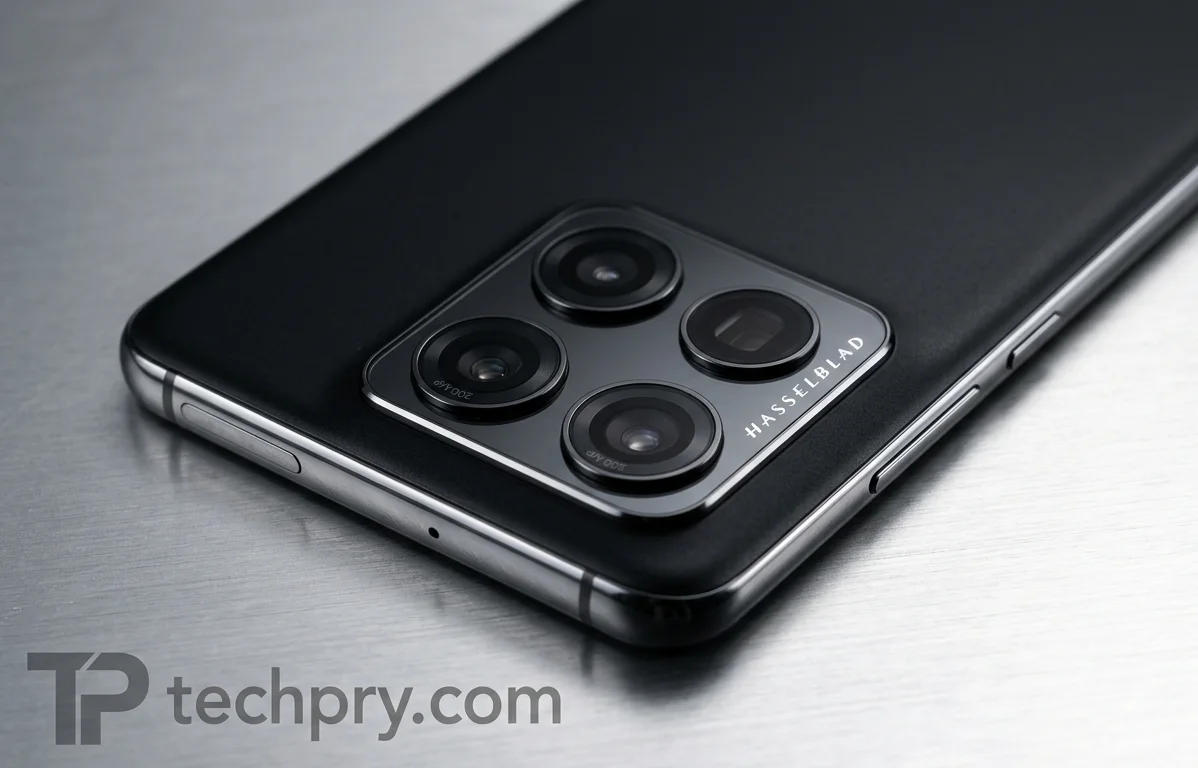
Image quality: excellent dynamic range and easy-to-like colour from the main camera
PhoneArena, one of the three reviews, calls the Hasselblad-tuned triple 200 MP system exceptional. GSMArena, another, found excellent dynamic range from the main camera, with well-preserved highlights and good shadow development. It also likes the default colour: the saturation is pleasing and the output easy to like, though auto white balance leans slightly warm.
Oppo's headline number is up to 17 stops of dynamic range, which 91mobiles describes as a video figure tied to Oppo's . Oppo credits that technology with raising the pixels' full well capacity by 60% over the previous design, but GSMArena says it did not directly test the 17-stop claim. The sensible reading is that the praise rests on tested photo behaviour, while 17 stops is a maker's figure that remains unproven.
Which main-camera resolution gives the best detail: 12.6 MP, 26 MP, 50 MP or 200 MP?
In GSMArena's comparison, the 12.6 MP Standard mode gave finer detail and cleaner lines than the default 26 MP mode, and 200 MP added little. The table sums up its mode-by-mode findings.
| Main camera mode | What GSMArena found |
|---|---|
| 12.6 MP Standard | Finer, well-defined grass shoots and thinner, better-looking straight lines than the 26 MP mode, with some jaggies. |
| 26 MP (default High resolution) | Grass, leaves and small text look soft and not well defined; only okay at pixel level, and the X9 Ultra does substantially better in this mode. |
| 50 MP | Quite alright, and better still when downscaled to 26 MP, at least in well-lit outdoor scenes. |
| 200 MP | Added little useful detail, with at most a small advantage after downscaling in certain scenes. |
This is one review's testing rather than a consensus, but it points one way: the default 26 MP mode is the one that underwhelmed, and the X9 Ultra, with its larger main sensor, does better there. For everyday shooting, the findings favour the 12.6 MP Standard mode, or 50 MP downscaled in good light, over chasing 200 MP.
Image processing and shooting modes: Hasselblad tuning, restrained processing and AI editing
Image processing runs through Oppo's , which brings Hasselblad Master Mode's tonal approach to the default Photo mode and dials back sharpening, noise reduction and AI-generated detail. 91mobiles, judging on paper, thinks that is the right call, since it would rather a phone leave some shadow in a backlit portrait than flatten it. The same reviewer finds the , which edits photos from natural-language instructions in Oppo's ColorOS software, a slightly awkward neighbour for a camera pitched as true-to-life.
There is a trade-off to watch. Less sharpening and less synthetic detail suits natural rendering, and it may be part of why GSMArena found the default 26 MP shots soft, though neither source makes that link. Buyers who like crisp, ready-to-post files should keep that in mind before assuming the 200 MP count means sharper output.
The rest of the camera toolkit:
- The gathers light-temperature and multispectral colour data to improve accuracy in mixed lighting. It relies on a rear 3.2 MP, f/2.4, 95-degree multispectral camera that GSMArena describes as a 24-channel sensor.
- Hasselblad Hi-Res mode shoots at 50 MP and 200 MP.
- produces 22 MP panoramic crops at a 65:24 aspect ratio from the rear cameras.
- Rear modes include Photo, Video, Portrait, Night, Panorama, SLO-MO, Long Exposure, Time-lapse, Sticker, Xpan, Google Lens, Underwater, Master, Hypertext, Doc Scanner, Pro Video, Hasselblad Hi-Res and Hasselblad Teleconverter. The front camera gets a shorter list: Photo, Video, Portrait, Night, Panorama, Time-lapse, Sticker, Pro Video and Hasselblad Hi-Res.
- Hasselblad branding shows up as an orange accent in the camera interface and the company's logo on the back.
No dedicated camera button: the hardware shutter key has been dropped
The phone has no dedicated camera button. The customisable is still there, but the hardware camera key that the X9 Pro and X9 Ultra carried is gone. Two of the three reviews, GSMArena and PhoneArena, treat that as a step backwards. PhoneArena says it kept reaching for the old button out of muscle memory, and GSMArena adds that the Snap Key is not on the right side to serve as a camera key; it also notes that high-end camera phones are increasingly dropping these buttons.
How much this matters depends on habit. Someone who opens the camera from the screen will not notice, but anyone who relied on a physical shutter key for quick shots on a camera-first phone loses a real convenience.
Video recording: 8K at 30 fps and 4K up to 120 fps
Rear video reaches 8K at 30 fps, 4K at up to 120 fps and 1080p at up to 240 fps. The most practical headline is capture, which is available at 4K and 1080p in 120, 60 and 30 fps.
| Resolution | Highest frame rate | Also listed |
|---|---|---|
| 8K | 30 fps | No extras listed |
| 4K | 120 fps | Dolby Vision at 120, 60 and 30 fps; slow motion at 120 fps; stabilised (EIS/OIS) at 60 and 30 fps |
| 1080p | 240 fps | Dolby Vision at 120, 60 and 30 fps; stabilised (EIS/OIS) at 60 and 30 fps |
| 720p | Slow motion at 480 fps on the spec sheet, 240 fps on Oppo's official page | None listed |
Because the stabilised and Dolby Vision modes are listed for 4K and 1080p but not for 8K, 4K is where the feature set is deepest, and 8K reads more as a headline spec. The 480 fps figure at 720p should be treated with caution, since Oppo's own page gives 240 fps as the maximum. Video zoom runs to 3x optical and 18x digital, and front-camera video goes up to 4K at 60 fps.
Battery life: stellar endurance, but 8,000 mAh is not the capacity everywhere
Real-world battery life is a clear strength: 91mobiles saw only about a 40% drop over a day as a primary device, with enough left for almost all of the next day, and two of the three reviews, 91mobiles and PhoneArena, treat the large battery as a plus. Capacity does depend on the region, though: the spec sheet lists 8,000 mAh with charging up to 80 W wired and 50 W wireless, but Europe gets a smaller 7,150 mAh cell.
PhoneArena places the 8,000 mAh version in Hong Kong import models, while thegioididong.com says domestic versions have 8,000 mAh and the European and international ones have 7,150 mAh. Oppo's own page lists 8,000 mAh as the typical capacity and 7,790 mAh as the rated one, and the cell is a type.
On the evidence, the smaller European cell is not a weak spot: thegioididong.com credits the 7,150 mAh capacity, together with the efficient 2 nm chip, with two to three days of use. The two endurance reports are not like-for-like, since one is a couple of days of personal use and the other is launch coverage describing the smaller version. What the regional split changes is value: a European buyer pays €1,799 for a cell smaller than the one on the spec sheet.
Charging: 80 W wired and 50 W wireless, with the charger in the box
The phone charges at up to 80 W wired, through or UFCS, and at 50 W wireless, and an 80 W charger is bundled. 91mobiles' reviewer said the charging speed could have been better for a cell this size, and it is the only one of the three reviews to raise it.
Extras include reverse wireless charging and . The phone is also compatible with slower standards: SUPERVOOC at 67 W and below, third-party UFCS at 44 W, PPS at 55 W and PD at 13.5 W, so older chargers still work, just not at full speed. The battery is not user-replaceable. The box also holds a USB data cable, SIM ejector tool, protective case and guides, though contents may vary by market. In practice, the bundled charger spares you an extra purchase on an expensive phone, while the criticism is aimed at speed relative to the battery's size.
Price: $1,199 on the spec sheet, but €1,799 in Europe and Rs 1,99,999 in India
The spec sheet lists a $1,199 launch price, but the prices reported in actual markets are far higher: €1,799 for the 512 GB model in Europe, Rs 1,99,999 in India and $1,759 to $1,799 for global import models before shipping and fees.
| Where | Price | What to know |
|---|---|---|
| Spec sheet | $1,199 | Listed launch price. |
| Europe | €1,799 | 512 GB model, with the smaller 7,150 mAh battery. |
| India | Rs 1,99,999 | Price given by 91mobiles. |
| Global imports | $1,759 to $1,799 | Hong Kong version with the 8,000 mAh battery, before shipping or other fees. |
It is the highest-end and most expensive model in the range, and according to 91mobiles Oppo's most expensive flagship yet.
PhoneArena, one of the three reviews, calls the price the biggest drawback: it echoes Oppo enthusiasts in calling it a foldable-phone tax on a standard slab phone, a jump that does not feel justified. 91mobiles is more conditional: whether the price is worth it depends on how much of the phone you will use and on how it compares with the cheaper , which shares the 8,000 mAh battery, 80 W charging and 200 MP main and telephoto cameras but gives up the 200 MP ultrawide, the 2 nm chip and the bigger display.
That comparison is the most useful lens on the price. The premium over the base model buys three things: the ultrawide, the chip and the screen. If most of your photos come from the main and telephoto cameras, the cheaper phone shares those, so the premium buys less for you; if you shoot a lot of ultrawide and want the larger display, that is where the extra money goes.
Release date and availability: September 2026 launch and a Vietnam event on 28 October
The Pro Max was announced and released in September 2026, with the Find X10 series launching globally in Mallorca, Spain. According to thegioididong.com, it went on sale in international markets such as the UK, Germany, France and other European countries, and a Vietnam launch event was scheduled for 28 October 2026. It is categorised as a flagship. Buyers in those European markets will meet the European configuration, with its 7,150 mAh battery, 512 GB storage and €1,799 starting price.
Performance: a 2 nm chip with efficiency-led gains and spec-sheet benchmark scores
The Pro Max runs MediaTek's , built by TSMC on a 2 nm process, and PhoneArena, one of the three reviews, says it pushes the performance envelope. The eight CPU cores are arranged 2 + 3 + 3: two C2-Ultra cores at 4.55 GHz, three C2-Pro cores at 4.35 GHz and three C2-Pro cores at 3.1 GHz. Graphics come from the MP12 GPU and AI work from MediaTek's NPU 1090.
thegioididong.com's launch coverage lists these gains over the previous generation:
| Component | Reported gain |
|---|---|
| Arm C2 CPU cores | Up to 61% better multi-core power efficiency |
| GPU | 27% faster, ray tracing 18% faster and up to 24% less power |
| NPU | 51% faster AI instruction processing and 55% better data-generation speed per watt |
Several of those gains are about efficiency rather than raw speed, which fits the battery results above, since a chip that does the same work on less power helps a phone stretch its cell.
Benchmark figures come from the spec sheet: scores of 3,943 single-core and 12,130 multi-core, and an 11 total of 4,706,878 with a GPU sub-score of 1,824,959. Treat them as reference points rather than an independent verdict.
Upgrade value: improved in many ways, but not enough to force a switch
Probably not for owners of the : PhoneArena says the Pro Max improves on it in many ways, but none of them should force an upgrade. The same review says the phone carries on the formula behind last year's model, with upgrades in all core areas and most notably the camera.
The camera changes are narrower than the headline suggests: the main sensor goes from 50 MP to 200 MP in essentially the same optical format, the telephoto hardware is unchanged and the ultrawide is the new part. The phone is also slightly thicker and heavier, and it drops the hardware camera button.
For owners of the the picture is different. 91mobiles lists a newer chipset, a bigger battery and an upgraded ultrawide as the gains, but GSMArena points out that the Ultra keeps the larger main sensor. If most of your shots come from the main camera, that is a reason to hold onto the Ultra; if the ultrawide or battery life matter more, the Pro Max has the edge.
Display: a flat 6.78-inch AMOLED with 1.15 mm bezels and a hidden light sensor
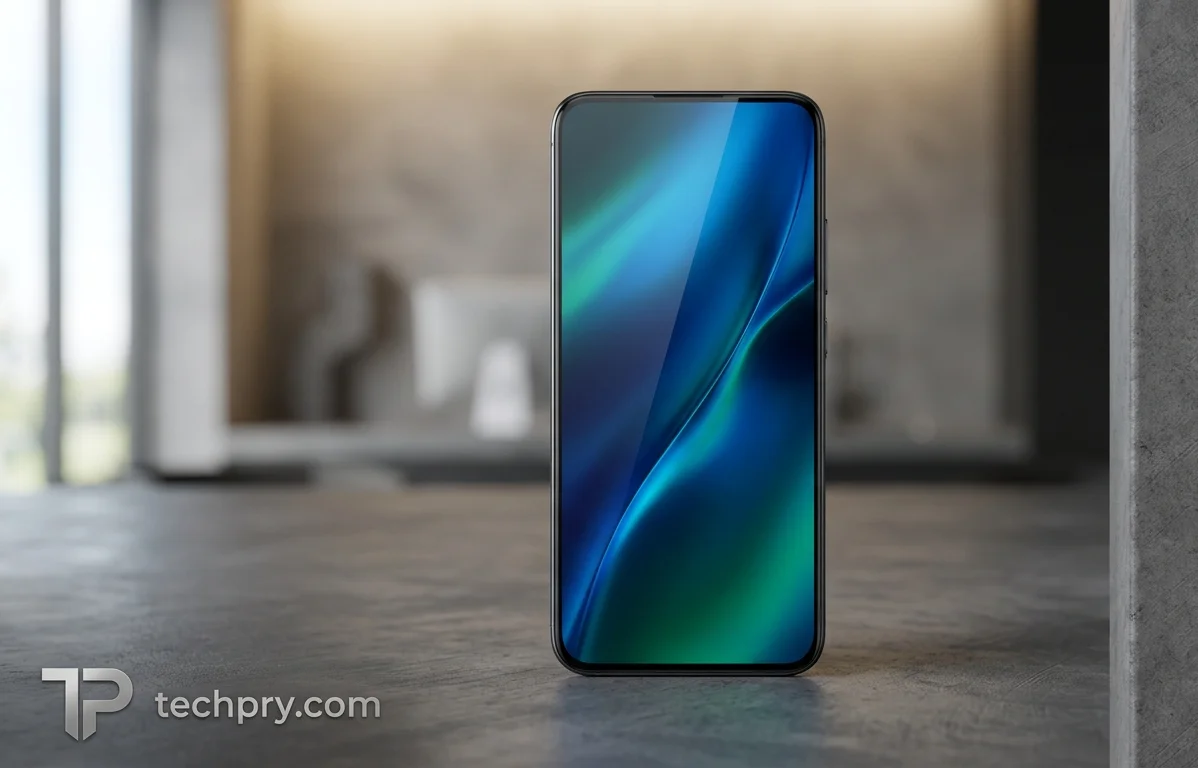
The screen is a flat 6.78-inch AMOLED with a 1272 x 2772 resolution and 450 ppi, and it adapts between 1 and 120 Hz, with 144 Hz reserved for games. 91mobiles calls the panel and reports symmetrical 1.15 mm bezels, while PhoneArena stresses that the screen is completely flat.
One practical detail comes from Oppo's official page: the light-sensor hole is hidden at the top of the screen to keep the front compact, so screen protectors with poor light transmission, such as coloured or darkened ones, can block it and affect normal use. Stick to clear protectors.
Two display specs conflict. The spec sheet lists and a 91.4% screen-to-body ratio, but Oppo's official specification page lists Crystal Guard cover glass and a 95.5% ratio. If the glass type matters to you, the maker's own listing is the safer guide.
Refresh rate, brightness and HDR
Everyday use adapts between 1 and 120 Hz, and the 144 Hz maximum applies only in some games. Peak brightness is rated at 2,000 nits and 3,600 nits in HDR, with Dolby Vision supported.
91mobiles' reviewer is fine with the 144 Hz limit because few apps need more. The same review describes the 3,600 nits as a local peak and 2,000 nits as the global figure, which suggests the top number applies to small bright highlights rather than a full white screen. Oppo's official page lists 800 nits as the typical normal brightness, and dimming goes down to 1 nit with 3,840 Hz PWM for night-time reading.
Design and in-hand feel: great in the hand, standard in looks
PhoneArena says the phone sits great in the hand, though it is slightly thicker and heavier than last year's Find X9 Pro. It calls the aluminum frame with curved corners, flat screen and flat matte glass back a design language that has become standard for the industry.
The same reviewer thinks the glass plateau around the camera island, with the flash and colour spectrum sensor separated from the main enclosure, copies the design language, while conceding that three 200 MP sensors and a large battery might justify a roomy plateau. Oppo's own description is a borderless design in which one-piece sculpted glass flows into the camera module so the bump looks less like an afterthought.
Both design verdicts come from PhoneArena alone, one of the three reviews, so they are one reviewer's taste. The more useful signal is comfort in the hand; a familiar look matters mostly if you want a phone that stands out.
Dimensions, weight and build
The phone measures 161.32 x 76.57 x 8.4 mm, which grows to about 12.87 mm including the camera bump, and it weighs 233 g (about 235 g in Titanium Grey). PhoneArena says it is slightly thicker and heavier than the Find X9 Pro. The back is glass and the frame is metal, which PhoneArena identifies as aluminum. It has an water and dust rating and a for cooling. The gap between the 8.4 mm body and the bump matters if you plan to use a case or want the phone to lie flat on a desk.
Colours: Luna White is the showpiece, Titanium Grey the quieter option
The spec sheet lists White, Gray and Orange, but 91mobiles and thegioididong.com name only two finishes for the Pro Max, Luna White and Titanium Grey, and the weight listing on Oppo's official page covers the same two. 91mobiles calls Luna White clearly the showpiece, with a silver camera island, a matte orange accent ring that Oppo calls a Hasselblad signature and a two-tone back that mixes smooth matte glass with a fabric-inspired pattern, and it calls Titanium Grey the quieter option.
Those verdicts come from one of the three reviews. The orange on the spec sheet may refer to that accent ring rather than a body colour, though no source says so; the safest assumption is two body colours.
Software: Android 17, five years of OS updates and six of security patches
The phone runs Android 17 with . Oppo lists five years of OS updates and six years of security updates, which means the final year brings security patches only.
RAM and storage: fast memory, configurations that vary by market and no card slot
The spec sheet lists 12 GB of RAM and 256 GB of storage, with no memory card slot. The 256 GB figure is the outlier, because the configurations quoted elsewhere differ by market:
| Source | Configurations |
|---|---|
| Spec sheet | 12 GB RAM with 256 GB storage |
| Oppo official page | 12GB+512GB and 16GB+512GB |
| PhoneArena listing | 12GB/256GB, 12GB/512GB, 16GB/512GB and 16GB/1TB |
| India (91mobiles) | A single 12GB+512GB configuration |
| Europe (thegioididong.com price table) | 512 GB at €1,799 |
With no card slot, the storage you buy is the storage you keep, and 512 GB is the entry point in every market where a configuration is quoted. Buyers who want more room should look at the 1TB option on PhoneArena's listing.
Connectivity and audio: Bluetooth 6.2, USB 3.2, no headphone jack and no FM radio
Wireless support is current: with 160 MHz channels on 5 GHz and 320 MHz on 6 GHz, plus Bluetooth 6.2 with LE Audio. Wired, there is a USB Type-C 3.2 port with OTG and DisplayPort output. There is no headphone jack and no FM radio.
The missing jack puts weight on Bluetooth codecs, and the list is generous: SBC, AAC, aptX, aptX HD and LHDC 5.0. Speakers are stereo, and the phone can run concurrent 2.4 GHz and 5 GHz Wi-Fi at 2x2. Wired headphone users will need a USB-C adapter. NFC is listed on the spec sheet, but Oppo's page says support depends on the region, so importers should check.
Network and SIM: dual Nano-SIM slots, embedded SIM support and 5G
The phone takes two Nano-SIM cards in standby mode, with no hybrid slot, and it also supports . It supports 5G. Band lists differ slightly between the spec sheet and Oppo's official page, which adds GSM 1900 MHz and LTE bands 13, 32 and 71.
| Network | Bands |
|---|---|
| 2G GSM | 850/900/1800 MHz on the spec sheet; the official page adds 1900 MHz |
| 3G WCDMA | 1/2/4/5/6/8/19 |
| 4G LTE FDD | 1/2/3/4/5/7/8/12/17/18/19/20/25/26/28/66 on the spec sheet; the official page also lists 13, 32 and 71 |
| 4G LTE TDD | 38/39/40/41/42/48 |
| 5G NR | n1/n2/n3/n5/n7/n8/n12/n18/n20/n25/n26/n28/n38/n40/n41/n48/n66/n71/n75/n77/n78/n79 |
If you import or travel, compare your carrier's bands with these lists before buying.
Fingerprint reader and sensors: ultrasonic in-display scanner, laser focus and spectral sensors
Biometrics come from an in-display ultrasonic fingerprint scanner. The sensor set covers proximity, gyroscope, accelerometer, ambient light and compass, plus a laser focusing sensor that assists autofocus and colour temperature and spectral sensors. That last pair lines up with the True Color Camera's job of reading light conditions for colour accuracy. A Hall sensor is fitted, but it is for magnetic accessory detection only and cannot detect smart covers, which matters if you are shopping for a flip case.
Who this phone suits, and who should skip it
The Pro Max fits a buyer who ranks the camera above everything: strong dynamic range and pleasing colour, a battery that lasts beyond a day, an 80 W charger in the box and five years of OS updates with six of security updates. It also suits someone who can live with the price and wants the 200 MP ultrawide, 2 nm chip and larger display that the cheaper model gives up.
It is a harder sell for X9 Pro owners, for anyone who relied on a hardware camera button, for buyers who expect 200 MP files to deliver visibly more detail, and for people who need a headphone jack or a memory card slot. European buyers should also check the version in front of them, since the 8,000 mAh battery on the spec sheet is not the capacity sold there.
Comments 0
Please log in or sign up to comment.