
Snapdragon 8 Gen 2: A 1+4+3 CPU Bet, Ray Tracing and Qualcomm's Battery Claims
Qualcomm's 2022 flagship chip swaps an efficiency core for a performance core, and most of its speed and battery gains are Qualcomm's own figures, so sustained performance is the open question.
Contents
- Snapdragon 8 Gen 2 at a glance: a flagship chip from November 2022
- CPU layout: a 1+4+3 design with one 3.2 GHz prime core
- Speed and efficiency gains over the 8 Gen 1, as Qualcomm claims them
- Graphics: hardware ray tracing and the GPU specs behind it
- AI performance: a reworked NPU and a new always-sensing block
- Camera and ISP: support for a 200 MP sensor and AI-assisted photo processing
- Video capture, playback and codec support
- Connectivity beyond 5G: next-generation Wi-Fi, Bluetooth 5.3 and dual-band GPS
- Audio: 48 kHz lossless streaming and lower-latency gaming modes
- Which phones use the Snapdragon 8 Gen 2: launch partners and expected devices
- Samsung and Qualcomm: left off the launch slide, then a deal through 2030
- 5G: the X70 modem, 10 Gbps peaks and dual-SIM 5G
- Display support: 4K external screens, QHD on the device and refresh rates up to 144 Hz
- Benchmark and game performance: what the listed numbers show
- CPU and system scores: 1,611,015 overall, 2,023 single-core and 5,564 multi-core
- Game frame rates at Ultra settings: 56 FPS in Fortnite to 120 FPS in World of Tanks Blitz
- Graphics stress tests: Steel Nomad Light, Solar Bay and Wild Life Extreme
- Memory and storage: where the spec and PCMag disagree on RAM
- Who the Snapdragon 8 Gen 2 suits, and who should look elsewhere
Qualcomm took an efficiency core away from the Snapdragon 8 Gen 2 and gave the performance cluster an extra one, a 1+4+3 arrangement that Tech Advisor called surprising. That single decision frames the chip's pitch: more muscle for demanding apps and games, with the battery cost answered mainly by Qualcomm's own 40% efficiency claim from the November 2022 announcement. The spec sheet adds the figure worth keeping in mind while reading every performance claim below: a sustained power limit of 8.5 W.
Snapdragon 8 Gen 2 at a glance: a flagship chip from November 2022
The Snapdragon 8 Gen 2 is a flagship-class, 8-core mobile chip from Qualcomm, model SM8550-AB, announced in November 2022. Tech Advisor dates the unveiling to 15 November, at Qualcomm's Snapdragon Summit. It is manufactured by on a and carries 16 billion transistors. Qualcomm lists an official site for the chip.
Qualcomm frames the chip around five Snapdragon-branded headings: Smart for AI performance, Sight for object recognition, Elite Gaming for hardware ray tracing, Connect for AI-driven connectivity and Sound for spatial audio and lossless support. PCMag expects it to power top Android phones and tablets for the year after its announcement. The spec lists the as its successor, so this is a previous-generation chip, and the useful question is what it delivered when it arrived.
CPU layout: a 1+4+3 design with one 3.2 GHz prime core
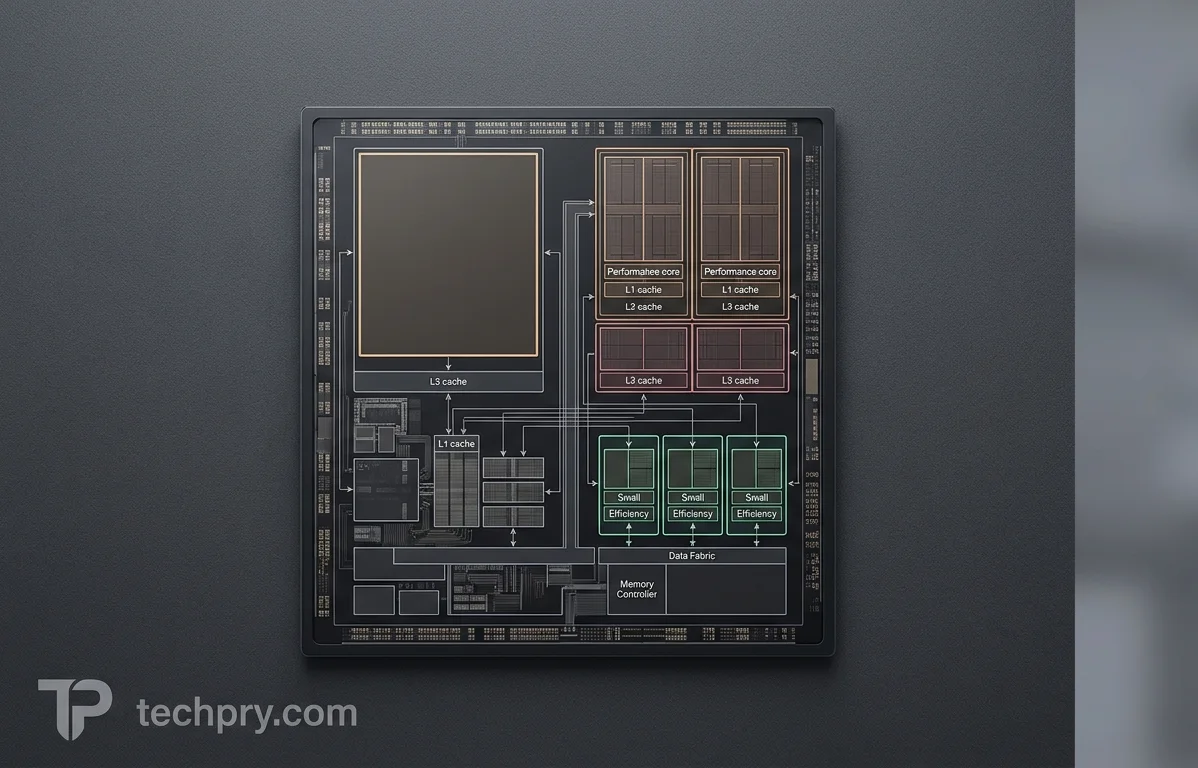
The CPU has eight cores in a 1+4+3 layout: one prime core at 3.2 GHz, two and two Cortex-A710 cores at 2.8 GHz, and three Cortex-A510 efficiency cores at 2 GHz. The instruction set is 64-bit ARMv9-A, with 1 MB of L2 and 8 MB of L3 cache.
The notable move is against the : Điện máy XANH, PCMag and Tech Advisor all contrast this layout with the older 1+3+4 split of one prime, three performance and four efficiency cores.
The four performance cores are not a uniform tier. Tech Advisor explains that the A715 cores support only 64-bit, so the two A710 cores are there to run legacy 32-bit apps rather than leaving them to the slower efficiency cores. That gives the extra core a practical job beyond raw speed, and Tech Advisor, the only one of the three outlets to weigh the design, also argues that it improves performance in demanding applications such as gaming, where several big threads are needed. The same outlet voices the obvious worry: with fewer efficiency cores, battery life could suffer. It adds that Qualcomm doesn't seem concerned and points to its claim of 40% better power efficiency.
Speed and efficiency gains over the 8 Gen 1, as Qualcomm claims them
Qualcomm's headline CPU claim is 35% faster performance and 40% better power efficiency than the 8 Gen 1, as Điện máy XANH and Tech Advisor relay it. PCMag reports a different framing: 40% more performance without hurting battery life. The two versions don't line up, and in every case these are Qualcomm's claims rather than independent measurements.
The GPU figure is the one claim all three outlets repeat: up to 25% faster than the 8 Gen 1 GPU. Điện máy XANH adds that the GPU saves 45% more battery.
Tech Advisor sets the efficiency story in context. It calls beating the 8 Gen 1 a low bar given the frequent battery and overheating issues with phones built on it, yet judges that Qualcomm's numbers point to a further step up from the already improved , which promised 30% more efficiency and in practice delivered vastly superior battery life.
For a buyer, that leaves a plausible but vendor-supplied efficiency gain. The only hard number in the spec is the 8.5 W sustained power limit, and a power ceiling is not a battery-life figure. PCMag also notes support for rapid charging, which speeds up recharging but says nothing about how long a charge lasts.
Graphics: hardware ray tracing and the GPU specs behind it
Yes: the GPU supports , and two of the three outlets, Điện máy XANH and PCMag, single it out as a gain for mobile games. Điện máy XANH calls it the most interesting addition to the GPU, saying it improves detail, reflections and shadows. PCMag calls it a boon for mobile gaming, with more lifelike lighting and shadow effects. Tech Advisor takes a wider view: for gamers, the Adreno GPU matters even more than the CPU.
Behind that sit the specifications: the Adreno 700 architecture at 680 MHz, with 3 pipelines, 512 shading units (1536 total shaders) and 2089 Gigaflops. API support covers , OpenCL 2.0, and OpenGL ES 3.2. PCMag adds support for 10-bit color and HDR formats including , and expects these formats and APIs to let game developers push boundaries and build more immersive worlds.
Ray tracing is a capability, not a result: the praise describes what the hardware allows, and games still have to be written to use it, so the verdict on this feature is conditional on game support.
AI performance: a reworked NPU and a new always-sensing block
Qualcomm overhauled the with a fused AI accelerator architecture that combines an updated Tensor accelerator, Vector extensions, a Scalar accelerator and Direct Link. Beside it sits a new with dual AI audio processors and always-sensing camera support.
PCMag relays Qualcomm's claim of up to 4.35x the AI performance of the previous generation chip, with efficiency up 60%, which lets phone makers bring more to their hardware. The words up to mark a best case rather than an everyday gain. PCMag also says Qualcomm is banking on the re-architected CPU plus updates to the GPU, the Hexagon block and the hub, so the AI gain isn't credited to the NPU alone.
On the camera side, Điện máy XANH, the only outlet to say so, credits the Hexagon AI processor working with the camera ISP for the most professional-standard photos, and says it can tell objects apart and recognize subjects in any photo and environment.
Camera and ISP: support for a 200 MP sensor and AI-assisted photo processing
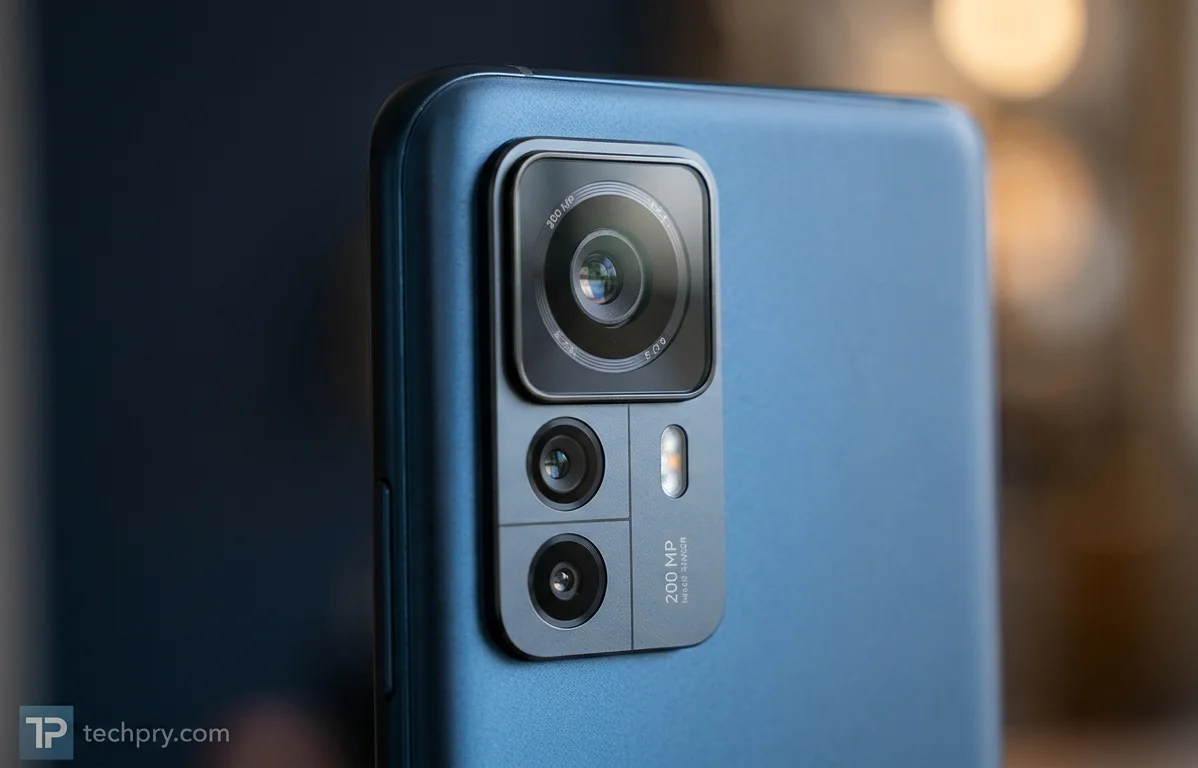
The 18-bit Spectra ISP supports a single sensor of up to 200 MP, along with face detection, HDR and Bokeh Effect. PCMag credits Qualcomm's pillar with better object recognition and lists AI-based autofocus, facial recognition and exposure among what the ISP supports, while Điện máy XANH describes the same object and subject recognition. Video capture is quoted at 8K, with 64MP stills alongside it.
A is not new, as Điện máy XANH points out: that resolution already caused a stir in early August on the . What it says sets this chip apart is zoom, noise reduction when zooming and a very sharp ISP. PCMag reports Qualcomm's claim that the new features allow secure facial recognition for phone locks, with future devices able to account for facial features, hair, eyes and skin, and that Qualcomm is working more closely with image sensor makers Samsung and Sony.
Two cautions follow. The 200 MP figure is a ceiling on supported sensor size, and because PCMag pairs 8K video with 64MP stills, it would be unwise to assume 200 MP stills and 8K video arrive together. Photo quality will also follow each phone's sensor and tuning, and the richer face recognition is framed as something future devices will be able to do.
Video capture, playback and codec support
Capture tops out at 8K at 30 FPS or 4K at 120 FPS, while playback reaches 8K at 60 FPS or 4K at 120 FPS, so the chip can play back 8K at twice the frame rate it can record. HD slow motion goes up to 960 FPS. Capture formats are Dolby Vision, HDR, HDR10, and (HLG).
Supported video codecs are H.264, H.265, VP8 and VP9, and the audio codecs are AAC, AIFF, CAF, MP3, MP4 and WAV. PCMag mentions hardware-accelerated H.265 and V9 decoding; the spec's codec list has VP9 and no V9, so that is likely a slip in the original wording.
Connectivity beyond 5G: next-generation Wi-Fi, Bluetooth 5.3 and dual-band GPS
The chip supports (802.11be), with a, b, g, n, ac and ax also listed, through Qualcomm's FastConnect system. PCMag names that system , while Điện máy XANH writes 78000, so the exact model name is worth checking before comparing phones. Both describe faster connections and low latency, and Điện máy XANH adds connection in the 6 GHz band.
Qualcomm says the system reaches Wi-Fi 7 downloads of 5.8 Gbps, and lists 8x8 MIMO, 4K QAM, dual-band simultaneous (2x2, 2x2) and WPA3 enterprise-grade security. PCMag points out that the Wi-Fi Alliance had not finalized the Wi-Fi 7 spec at the time of the announcement. That makes this early-adopter territory: the 5.8 Gbps figure is a vendor ceiling that needs matching network gear, and the standard itself was still unfinished.
Beyond Wi-Fi, the chip lists Bluetooth 5.3, with its codec support covered under audio below, and USB 3.1 with USB-C. Navigation in the spec spans GPS, GLONASS, BeiDou, Galileo, QZSS, SBAS and NavIC, though 91mobiles and PCMag name fewer systems. PCMag singles out the and expects better street-level map experiences when walking among tall buildings.
Audio: 48 kHz lossless streaming and lower-latency gaming modes
A new version of enables 48 kHz lossless audio for music streaming, along with spatial audio with dynamic head-tracking. PCMag says the update pushes audio boundaries and helps bridge the last mile between phones and wireless headphones, specifically for music streaming. Điện máy XANH describes Snapdragon Sound as a new Qualcomm project for better wireless audio on Android, with simpler device-to-device connectivity and longer battery life.
Latency gets two different figures. PCMag cites new low-latency gaming modes that cut audio delay to 48 ms, while Điện máy XANH says the aptX codec brings latency down to 83 ms, more than 45% better than current technology. They come from different outlets under different labels, so they are not a like-for-like comparison.
On the Bluetooth side, the chip supports the aptX, aptX Lossless and codecs over Bluetooth 5.3. All of this is the phone's half of the link: the lossless and low-latency gains depend on headphones that support the same codecs.

Which phones use the Snapdragon 8 Gen 2: launch partners and expected devices
At launch, a wide group of hardware partners had signed up: Tech Advisor counts 17 phone manufacturers committed, and PCMag names Asus, Honor, Motorola, OnePlus, Oppo and Sony. PCMag and Tech Advisor expected the first commercial devices before the end of 2022, and PCMag expected a large wave in the first quarter of 2023, particularly around Mobile World Congress.
Tech Advisor's launch-time list of specific phones read like this:
- A phone might be first, confirmed to launch in China on 22 November, although early leaks suggested the series could mix Dimensity and Snapdragon chips across models.
- The range would almost certainly use the chip and was expected before the end of the year.
- Oppo confirmed it for the series, launching early the year after, as Tech Advisor put it at the time.
- The was expected to use it.
- The Sony Xperia 1 V and should follow later.
The rival picture is short. The chip's chief Android flagship rival was the , also promised in phones before the end of 2022, and Tech Advisor judged that premium hardware debuting after December 2022 would be hard to imagine on anything but the latest silicon, meaning one of the two. The Vivo leak hints at phone makers splitting a single series between MediaTek and Qualcomm silicon rather than committing fully to either.
Samsung and Qualcomm: left off the launch slide, then a deal through 2030
Samsung was missing from Qualcomm's initial list of supporters at launch, and Tech Advisor notes its logo wasn't on Qualcomm's presentation slide. Tech Advisor then reports that the two companies have signed a deal through 2030 and that Qualcomm announced a global share of chip shipments for the flagships, likely to launch in February 2023. The slide omission therefore says little about Samsung's plans; the shipment announcement is the stronger signal, though it names chip shipments for the flagships rather than this specific chip.
Two rumors predate the announcement. Digital Chat Station said a second version might use the same silicon with a prime core at 3.4 to 3.5 GHz instead of 3.2 GHz, and Ice Universe said a specially tuned, higher-clocked version was made specifically for the Galaxy S23 line. Neither is confirmed by the spec, which lists a single prime-core frequency of 3200 MHz.
5G: the X70 modem, 10 Gbps peaks and dual-SIM 5G
The modem is the . It supports and sub-6GHz in standalone and non-standalone modes, plus LTE Cat. 24, with peaks of up to 10 Gbps down and 3.5 Gbps up.
PCMag says the modem uses AI to balance 5G upload and download speeds against coverage, latency and power efficiency. Qualcomm claims its Snapdragon Connect platform is the world's most advanced 5G platform, adding AI to every connection. That label is a vendor claim, and the peak speeds are ceilings that depend on the network and the phone.
The feature with the clearest daily use is dual SIM: PCMag stresses that this is the first to support , so people can run two 5G connections at once for personal and work numbers. The listed secure processing unit for better enterprise security performance suits the same work-and-personal use.
Display support: 4K external screens, QHD on the device and refresh rates up to 144 Hz
Maximum display resolution is 3840 x 2160, which means UHD on an external screen, while on-device resolution tops out at QHD. Refresh rates reach 144 Hz and HDR is supported. PCMag cites 4K screens at 60 Hz, and lists at up to 144 Hz.
At the time of the announcement, PCMag noted, most top phones had QHD+ screens with refresh rates up to 120 Hz, and the chip lets phone makers raise those specs. The step from 120 Hz to 144 Hz is modest, so the more distinctive display detail is protection: the chip supports subpixel rendering for OLED uniformity and to reduce burn-in.
Benchmark and game performance: what the listed numbers show
The performance figures attached to this chip are listed results, not reviewer measurements, and the gaming results are all tied to one phone, the . That limits how far to generalize, since another phone with different cooling could land elsewhere. Tech Advisor's point that gamers should weigh the GPU even more than the CPU makes the game frame rates the numbers to read first.
CPU and system scores: 1,611,015 overall, 2,023 single-core and 5,564 multi-core
91mobiles lists an total of 1,611,015, described as the highest recorded by any device running the chip. Because it is the best result recorded, it works as a ceiling rather than a typical score. The scores are 2,023 single-core and 5,564 multi-core.
| AnTuTu component | Score |
|---|---|
| CPU | 387,339 |
| GPU | 613,431 |
| Memory | 306,362 |
| UX | 303,883 |
The GPU is the largest of the four components, which fits a chip whose pitch leans on graphics, while memory and UX are almost level.
Game frame rates at Ultra settings: 56 FPS in Fortnite to 120 FPS in World of Tanks Blitz
At Ultra settings the listed averages run from 56 FPS in Fortnite to 120 FPS in World of Tanks Blitz, all against the ZTE Nubia Red Magic 8 Pro. sits in between at 90 FPS, while averages 59.
| Game | Average FPS (Ultra) |
|---|---|
| World of Tanks Blitz | 120 |
| Shadowgun Legends | 118 |
| PUBG Mobile | 90 |
| Call of Duty: Mobile | 60 |
| Genshin Impact | 59 |
| Mobile Legends: Bang Bang | 59 |
| Fortnite | 56 |
The pattern falls into three tiers: two titles near 120 FPS, one at 90, and four between 56 and 60. That last group is where headroom is thinnest, and Fortnite is the lowest of them.
Graphics stress tests: Steel Nomad Light, Solar Bay and Wild Life Extreme
lists Steel Nomad Light at 1092, Solar Bay at 5312 and Wild Life Extreme at 3667.
| Test | Score | Graphics test | Stability |
|---|---|---|---|
| Steel Nomad Light | 1092 | 8 FPS | 67% |
| Solar Bay | 5312 | 20 FPS | not listed |
| Wild Life Extreme | 3667 | 21 FPS | 45% |
These are synthetic loads, so the low frame rates describe how hard the tests push, not how games will feel. The stability figures are the more useful part: they show how well performance holds across a run, and Wild Life Extreme's 45% suggests a large drop under sustained load, against 67% in Steel Nomad Light. Solar Bay's three sections step down from 23 to 20 to 17 FPS.
Set beside the 8.5 W sustained power limit and Tech Advisor's remarks about overheating in 8 Gen 1 phones, this is the best argument for checking sustained performance rather than peak scores in any specific phone, since cooling is the phone maker's job as much as the chip's.
Memory and storage: where the spec and PCMag disagree on RAM
Memory is at up to 4200 MHz on a 4x16-bit bus, giving a maximum bandwidth of 67.2 Gb/s. The size ceiling is where sources split: the spec, matched by 91mobiles, lists a 24 GB maximum, while PCMag states support for up to 16GB. A phone's shipped RAM is the maker's choice, so the gap matters only for configurations between 16 and 24 GB.
The spec lists UFS 3.1 and support, while 91mobiles and PCMag list only UFS 4.0. That is a narrower listing rather than a contradiction, and every listing includes UFS 4.0.
Who the Snapdragon 8 Gen 2 suits, and who should look elsewhere
Gamers get the clearest case: a GPU that Qualcomm says is up to 25% faster than the 8 Gen 1 GPU, hardware ray tracing that two of the three outlets praise, and listed Ultra-setting averages at or above 59 FPS in six of seven games. Buyers who want connectivity extras get dual 5G SIM support, early Wi-Fi 7 and lossless audio options, provided their network gear and headphones match. Camera-focused buyers should read the 200 MP figure as a ceiling and let each phone's sensor decide.
It is a weaker fit for anyone who needs guaranteed sustained performance or battery life, since the efficiency gains are Qualcomm's claims and Wild Life Extreme stability is listed at 45%. And anyone who wants the newest silicon should know the spec lists the Snapdragon 8 Elite Gen 5 as the successor.
Comments 0
Please log in or sign up to comment.