
iPhone 17 Pro Max: Battery Leader With Zoom and Charger Trade-Offs
Battery life, heat control and the new selfie camera earn the broadest praise from reviewers, while the cropped 8x zoom and the separately sold charger are the caveats most likely to change a purchase.
Contents
- Is the iPhone 17 Pro Max the best iPhone yet? Where reviewers agree and push back
- Battery life: CNET's test put it first among 35 phones
- Heat and sustained performance: what the new body and cooling change
- Size, weight and build: 233 g, a metal frame and a glass back
- Colors: Silver, blue and orange, and how reviewers rate them
- Durability and repairability: water resistance, drop rating and a battery you can't replace
- Selfie camera: an 18 MP square sensor that works in either orientation
- Rear camera: three 48 MP lenses, a first for iPhone
- Telephoto zoom: a 48 MP sensor and 4x optical zoom replace the 5x lens, and 8x is only a crop
- Camera modes and settings: plenty of control, plenty to learn
- Video recording: 4K at up to 120 FPS, but no 8K
- Charging: up to 40 W wired and 25 W wireless
- In the box: a braided USB-C cable and no charger
- RAM and storage: 12 GB of RAM, 256 GB to 2 TB, and who needs 1 TB or more
- Software and support: seven years of updates
- Price: $1199 at launch, store offers and Vietnamese prices by storage size
- Still worth buying now that the next iPhone is out? Availability and warranty
- Display: a 6.9-inch OLED, the largest screen in the iPhone 17 line
- Refresh rate and brightness: 1 to 120 Hz and up to 3000 nits
- Chipset: 3 nm silicon with a 6-core CPU and 6-core GPU
- Benchmark scores at a glance
- Connectivity: wireless standards, USB-C and 5G
- Audio, and what the phone leaves out
- Who should buy it, and who can pass
The iPhone 17 Pro Max did not need the biggest battery to win a 35-phone endurance test: CNET ranked it first anyway, and MacRumors, reporting the results, credits silicon efficiency and software optimization rather than raw capacity. The trade-offs sit elsewhere. The telephoto gives up 5x optical zoom for 4x, 8x shots are only a crop, and the faster charging needs an adapter that is not in the box. At $1199, unchanged from last year, that adds up to a phone for people who put endurance and a new selfie camera ahead of long-range zoom.
Is the iPhone 17 Pro Max the best iPhone yet? Where reviewers agree and push back
Two of the three reviewers are positive overall. GSMArena opens by calling it the best iPhone yet, pointing to the new aluminum body, better heat handling, upgraded selfie and telephoto cameras, a larger battery with faster charging and the latest iOS. Thurrott is more conditional: for buyers who find the too radical and the too similar to its predecessor, the Pro Max is perhaps a better mix of the new and the familiar.
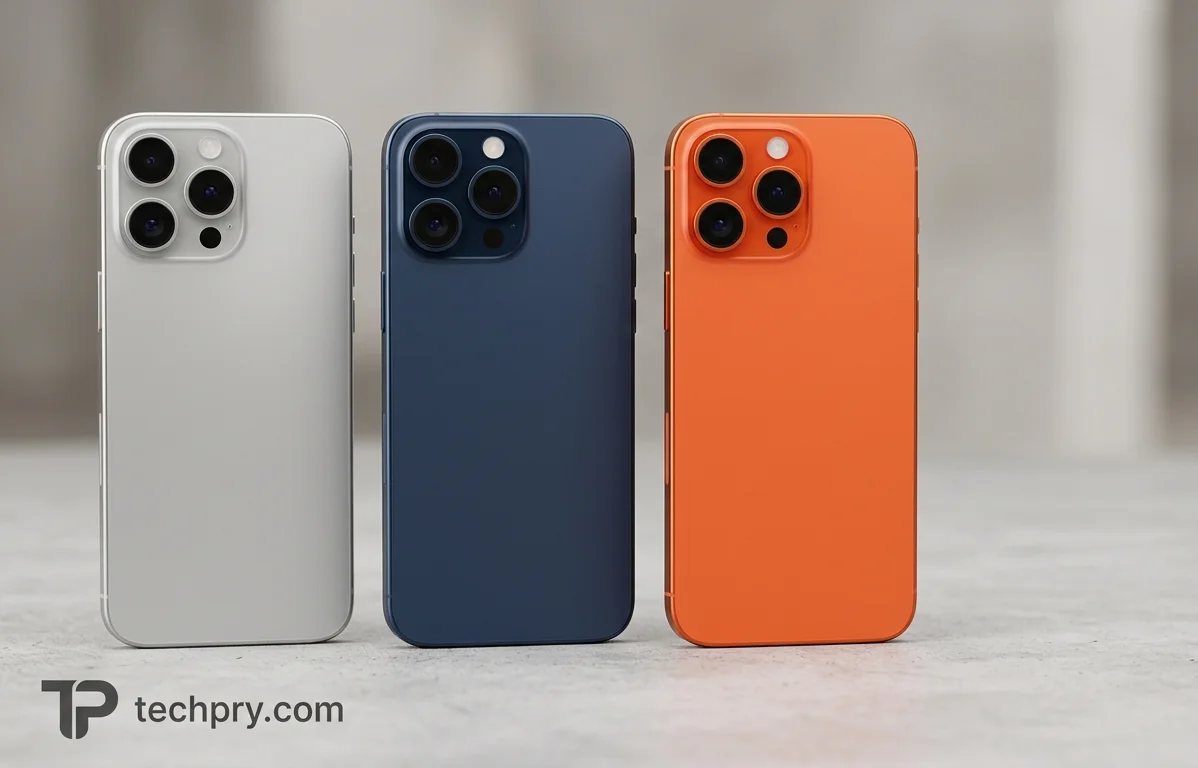
The complaints are narrower, and each comes from only one of the three reviewers. GSMArena objects to the charger being sold separately, is mildly disappointed that the notch is no smaller, and worries that dropping steel and titanium for aluminum may hurt Apple's image. Thurrott flags that 8x zoom is cropped rather than optical, that Apple burdens the camera with a myriad of settings, and that paint chipping looks especially noticeable on the color Thurrott chose, and has no love for the orange or silver finishes.
Sorted by what they cost in daily use, two of these matter: the cropped 8x zoom if you shoot distant subjects, and the missing charger if you want the full charging speed, since that is a second purchase. The color, notch and image complaints are matters of taste or perception, and a thin case should help against paint chipping. The praise, by contrast, lands on things felt every day: battery, cooling and the selfie camera.
Battery life: CNET's test put it first among 35 phones
The battery is 5088 mAh, and in CNET's test of 35 smartphones sold in the US it was the longest-lasting phone, even though it did not have the largest battery in the group. MacRumors, which reported the results, puts that down largely to silicon efficiency and software optimization. CNET averaged a three-hour full-brightness Wi-Fi video-streaming test with a 45-minute endurance run covering gaming, video streaming, social media scrolling and a video call, and the iPhone also ranked first in that endurance run on its own. GSMArena says battery life improved on the previous model, and FPT Shop says the phone lasts more than a day.
The tested times in the spec show how much the workload matters: 22:25 hr of video, 12:36 hr of web browsing, 08:17 hr of gaming and 154 hr of standby, for an overall rating of 33:14 hr. Heavy gamers should plan around the gaming figure rather than the video one, because the drain is far faster.
One number does not match. FPT Shop advertises up to 37 hours of video for the version it sells in Vietnam, while the spec lists 22:25 hr of tested video playback. The two appear to be measured differently, and an up-to claim is a ceiling, so the tested figure is the safer one to plan around.
Heat and sustained performance: what the new body and cooling change
Two of the three reviewers say heat handling improved. GSMArena credits the new aluminum body with improved performance and heat dissipation, and Thurrott says Apple reworked the Pro models to dissipate heat better, a problem Thurrott had with earlier iPhones. The spec lists a as the advanced cooling. FPT Shop says the aluminum frame and vapor chamber keep performance steady during long gaming or video recording, and it relays Apple's claim of up to 40% better sustained performance than the previous generation.
The evidence is directional rather than measured: both reviewers describe the improvement in general terms, and the 40% figure is Apple's own claim. Anyone who games or films for long stretches has good reason to expect better behavior than on earlier iPhones, but the one hard sustained-load number, the stability result in the benchmark section below, hints that some falloff remains.
Size, weight and build: 233 g, a metal frame and a glass back
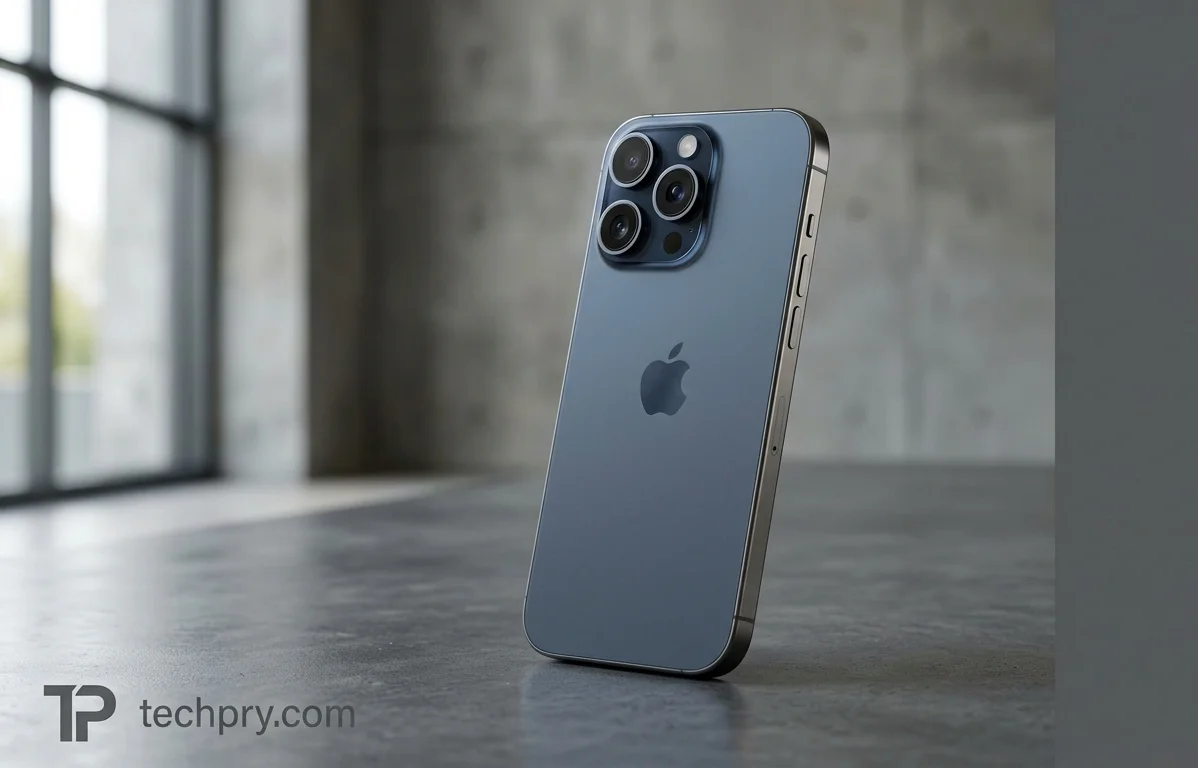
The phone measures 163.4 x 78 x 8.75 mm and weighs 233 g, with a metal frame and a glass back. The Pro models move to an for the first time. GSMArena says that helps keep weight in check, and Thurrott says the new Pro Max looks and feels no bigger, heavier or thicker than its predecessor and is clearly lighter than the , with the caveat that Thurrott uses a lot of big phones.
GSMArena adds a perception risk: the change from steel and titanium was made for practical reasons, but years of hyping those materials may come back to bite Apple. Read together, both reviewers who comment on weight see a gain from aluminum, and the one objection is about branding rather than hardware.
Colors: Silver, blue and orange, and how reviewers rate them
The phone comes in Silver, Blue and Orange, where the blue is sold as Deep Blue and the orange, is the generation's new signature color. The opinions here are personal and each comes from one of the three reviewers. Thurrott finds Cosmic Orange garish while noting that most reviewers seem to prefer it, and calls Silver about as boring as it gets. Thurrott chose Deep Blue as a compromise and likes the Pro Max's two-toned back, which a case hides.
If you plan to use a case, the color matters less, and a case also addresses the paint-chipping remark covered next.
Durability and repairability: water resistance, drop rating and a battery you can't replace
The phone is water-resistant and its screen is protected by . Drop resistance is rated Very good (B) over 180 drops, and repairability is rated Good at 3.04 out of 5. The battery is listed as not replaceable and is rated for 1000 charge cycles.
That last pair matters because software support is listed at seven years for both OS and security updates. A buyer who plans to keep the phone for the whole support window should think about battery service, since the battery is the part with the shorter rated life.
Thurrott reports that paint chipping is apparently particularly noticeable on Deep Blue, the color chosen, and that a thin case should at least help protect against it.
Selfie camera: an 18 MP square sensor that works in either orientation
The selfie camera is an 18 MP unit with a square sensor, an f/1.9 lens and a TOF 3D depth sensor, and it records 4K video at 60 FPS. Two of the three reviewers call it a major upgrade: GSMArena lists it as one of two major camera upgrades, and Thurrott calls it this year's biggest upgrade across the iPhone and Pro models, even while admitting to rarely taking selfies.
The practical gain is orientation. Because the sensor is square, portrait or landscape shots work however the phone is held, and FPT Shop frames this as taking a landscape group selfie with the phone upright. GSMArena hedges that the sensor is not quite square, so the label describes behavior more than geometry. Stills come out at 4896 x 3672 pixels. The people who will notice most are those who take group shots or switch between portrait and landscape framing.

Rear camera: three 48 MP lenses, a first for iPhone
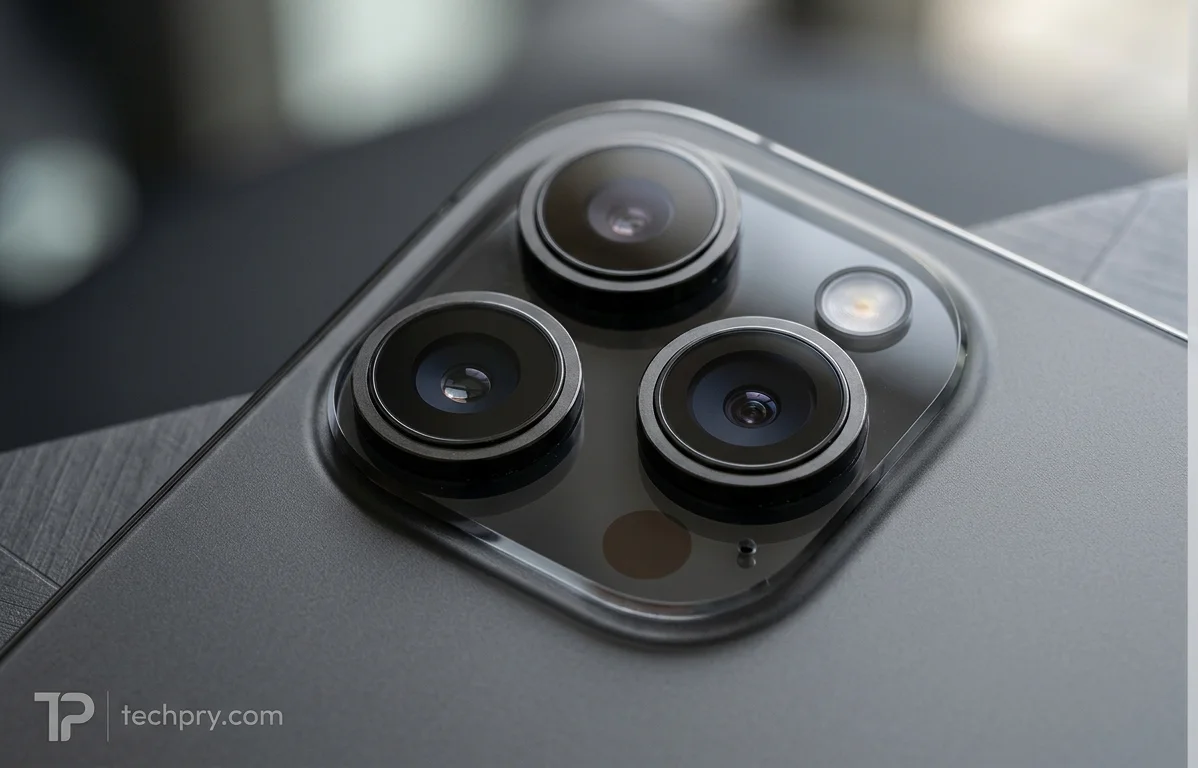
The rear system pairs three 48 MP lenses (standard, telephoto and ultrawide) with a depth lens, and Thurrott says it is the first iPhone with three high-resolution rear lenses. The standard lens has a 1/1.28-inch sensor behind an f/1.78 aperture. On paper, that means moving between the three lenses no longer drops to a lower-resolution sensor, which was not true of last year's 12 MP telephoto.
| Lens | Resolution | Aperture | Focal length |
|---|---|---|---|
| Standard | 48 MP | f/1.78 | 24 mm |
| Telephoto | 48 MP | f/2.8 | 100 mm |
| Ultrawide | 48 MP | f/2.2 | 13 mm |
Thurrott also points to a new camera plateau on the back that keeps the phone from wobbling when it sits on a table or other flat surface. It is a small practical touch for a phone that carries this much lens hardware.
Telephoto zoom: a 48 MP sensor and 4x optical zoom replace the 5x lens, and 8x is only a crop
The new telephoto is a 48 MP sensor with 4x optical zoom, replacing the 12 MP sensor on last year's , whose lens reached 5x. Two of the three reviewers see the change as an upgrade: GSMArena counts it among the phone's two major camera upgrades, and Thurrott agrees it is still an upgrade even with the shorter optical reach. FPT Shop adds that 4x and 8x shots show clearer detail, especially in low light.
The caveat is 8x. The optical zoom is only 4x, so Thurrott points out that 8x shots are cropped off the full sensor and come out at lower resolution. The 100 mm telephoto sits against a 24 mm main lens, and that gap is where the 4x figure comes from.
These accounts fit together. Against last year's 12 MP sensor, shots at 4x and 8x gain detail, but 8x remains a crop of the 4x lens and will not match true optical clarity. Whoever regularly shot at 5x loses that reach and gets a crop beyond 4x in return, which is the real cost of the swap. Buyers who mostly shoot from the main lens up to 4x gain a much higher-resolution telephoto.
Camera modes and settings: plenty of control, plenty to learn
Camera features include Bokeh mode, Pro mode and , and Apple offers a 24 MP image option that maps neatly onto the 48 MP lenses. The flip side is volume: Thurrott complains about the myriad camera-related settings Apple burdens the phone with, and says learning to live with and master them took effort. That is a complaint from one of the three reviewers. For casual shooters it is a reason to stay on default modes, and for anyone who wants Pro mode or RAW the depth is the point.
Video recording: 4K at up to 120 FPS, but no 8K
The main camera records 4K and 1080p at up to 120 FPS, shoots slow motion at 240 FPS in 1080p, and does not record 8K. GSMArena highlights that 4K120 clips can now be captured in . The selfie camera shoots 4K at 60 FPS, and FPT Shop notes the phone can film with two cameras at the same time.
For most buyers the missing 8K matters less than what these settings do to storage. Footage like this is the kind of 4K recording that Thurrott says pushes creators toward 1 TB or 2 TB.
Charging: up to 40 W wired and 25 W wireless
Wired charging tops out at 40 W, wireless charging at 25 W, and reverse charging is supported. The spec lists 65% in 30 minutes and a full charge in 1:12 hr, while FPT Shop quotes about 50% in 20 minutes with a charger of 40 W or more. Thurrott says wireless charging uses the latest and fastest version of the standard, which evolved from Apple's .
GSMArena says charging got faster and notes this is the first iPhone to adopt the . The condition is that taking advantage of the improved speed requires the separately sold charger. The 40 W and 65%-in-30-minutes figures therefore describe the phone with the right adapter, not out of the box, because the box has no charger.
In the box: a braided USB-C cable and no charger
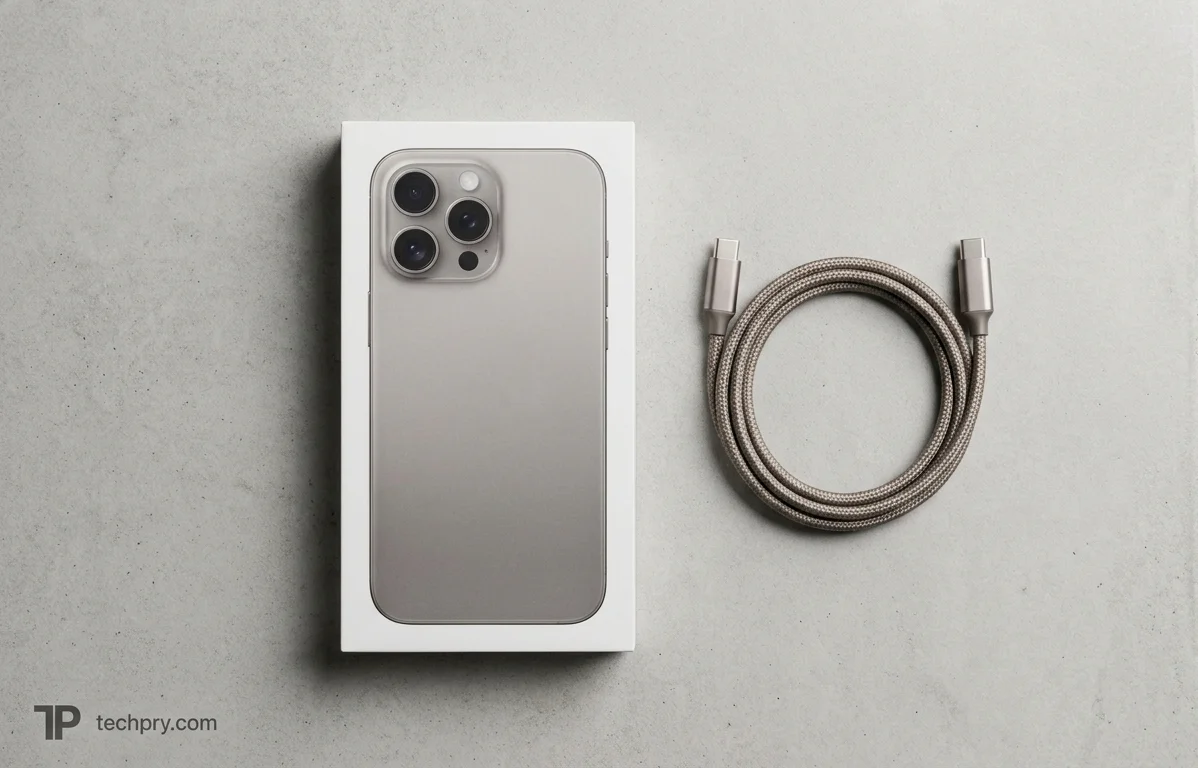
The box holds a braided USB-C cable, plus a SIM ejection pin for models with a physical SIM slot, and no charger. The phone ships in a very thin paper box with its back printed on the cover.
GSMArena criticizes the omission: the new with 60W Max is sold separately for an extra $39, and GSMArena argues it should have been a standard bundle for the first iPhone to adopt the AVS charging protocol. Only one of the three reviewers raised it, but it is the complaint with a price attached, charged for the charging speed that GSMArena counts as an improvement.
RAM and storage: 12 GB of RAM, 256 GB to 2 TB, and who needs 1 TB or more
The phone has 12 GB of RAM and storage in 256 GB, 512 GB, 1 TB or 2 TB configurations. The 2 TB option is new this generation, and there is no memory card slot.
Thurrott treats 256 GB as the minimum for any smartphone in 2025 and enough for someone who is neither a creator nor a professional. The 1 TB and 2 TB tiers are overkill for most people in Thurrott's view, but creators and professionals shooting 4K video or lots of RAW photos need them. With no card slot the choice is final at purchase, and the OS takes 20 GB of whatever capacity you buy. Three 48 MP lenses, RAW capture and 4K at up to 120 FPS make the camera the feature most likely to push someone past 256 GB.
Software and support: seven years of updates
The phone runs , upgradable to iOS 27, and the spec lists 7 years of OS updates and 7 years of security updates. FPT Shop's listing already shows iOS 27, which fits the spec's note about the upgrade path. GSMArena calls the phone the most comfortable home for the new OS and its interface, and says iOS gained more features.
is available in Vietnamese, which FPT Shop lists among its highlights. Seven years of both update types is a long horizon, long enough that the battery covered earlier is likelier than the software to be the limiting part of ownership.
Price: $1199 at launch, store offers and Vietnamese prices by storage size
The launch price is $1199, the same as the previous generation. GSMArena's best affiliate offers are $905.00 for 256 GB, $1,245.00 for 512 GB and $1,399.00 for 1 TB. The 256 GB offer sits well below the launch price while the 512 GB and 1 TB offers sit above it, so what you pay depends on storage tier and seller more than the launch figure suggests. The step from 256 GB to 512 GB also costs noticeably more than the one from 512 GB to 1 TB, which makes 1 TB the better value per gigabyte for anyone who knows they need the space.
In Vietnam, FPT Shop sells every storage tier below its launch list price.
| Storage | Launch list price | FPT Shop price |
|---|---|---|
| 256 GB | 37,999,000 VND | 34,990,000 VND |
| 512 GB | 44,499,000 VND | 41,490,000 VND |
| 1 TB | 50,999,000 VND | 46,990,000 VND |
| 2 TB | 63,999,000 VND | 59,990,000 VND |
The 2 TB version is the costliest at 59,990,000 VND, so the storage Thurrott calls overkill for most people is also where the price climbs fastest.
Still worth buying now that the next iPhone is out? Availability and warranty
Apple announced and released the phone in September 2025, and Apple stopped selling it in its online store from 9 September 2026, though FPT Shop still stocks it in all colors. FPT Shop argues it remains good value after the launch: after a generation it still has the A19 Pro chip and 12 GB of RAM, and older models' prices fall once a new generation arrives, so it suits buyers who do not need the latest upgrades.
That is a seller making its own case, so weigh it accordingly. The parts that stand on facts are the discounted Vietnamese prices above and the seven years of listed updates. With Apple's online store out of the picture, a retailer's stock and warranty terms are what you are buying into, and the official VN/A version sold at FPT Shop carries a 12-month warranty under Apple's terms.
Display: a 6.9-inch OLED, the largest screen in the iPhone 17 line
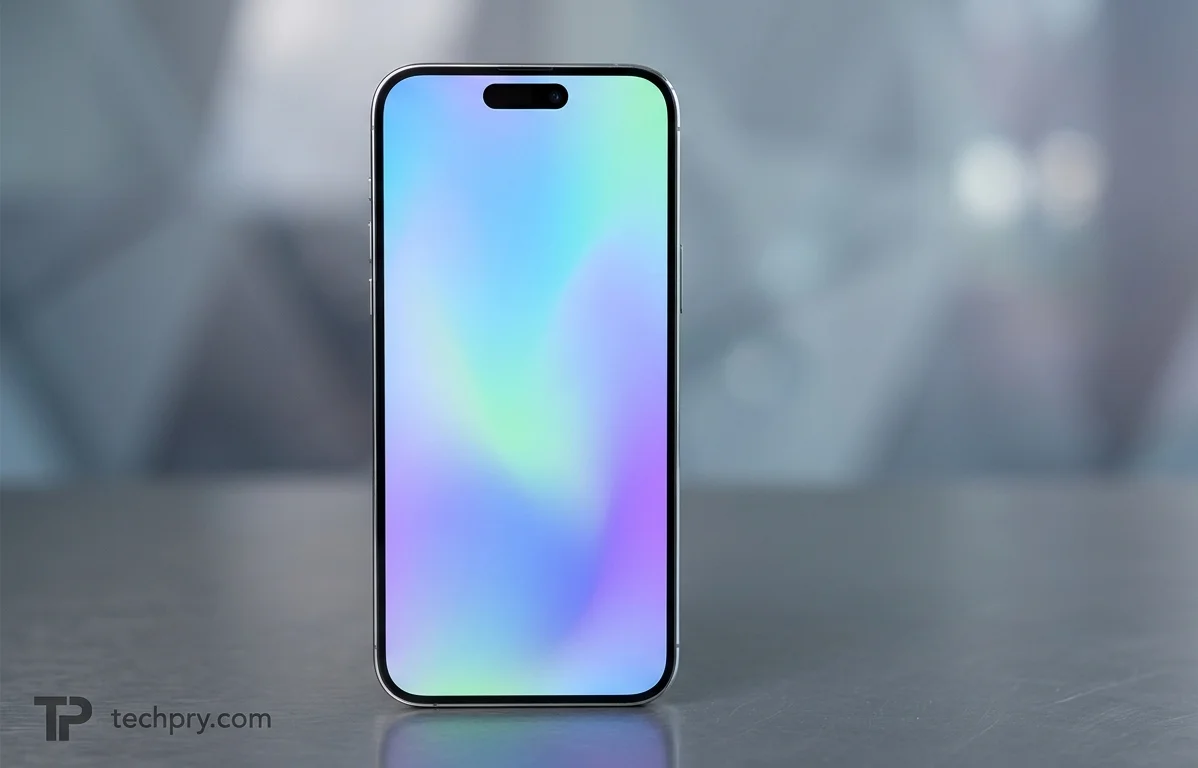
The display is a 6.9-inch OLED at 1320 x 2868 pixels (460 ppi, 19.5:9), and it is the largest screen in the iPhone 17 line. The screen-to-body ratio is 91.6%. FPT Shop calls it roomy enough for movies, documents and work, like a small tablet. GSMArena is mildly disappointed that the is unchanged, since a smaller notch was on many wish lists.
Screen size is what separates this model from the rest of the line, and it comes with the 233 g weight covered earlier.
Refresh rate and brightness: 1 to 120 Hz and up to 3000 nits
The display adapts its refresh rate from 1 to 120 Hz. GSMArena notes that all iPhones now have ProMotion screens, so 120 Hz is no longer a reason to pick the Pro Max over the rest of the line.
Rated maximum brightness is 3000 nits, with 1600 nits in HDR, while the automatic peak brightness test recorded 993 nits. FPT Shop describes the 3000 nits as an outdoor figure, so the numbers measure different situations rather than contradicting each other. The screen supports Dolby Vision HDR, DCI-P3 color and an Always-On Display. Tests recorded 99.9% RGB color space coverage, 240 Hz PWM, a 1 ms response time and infinite contrast. The PWM figure is the one to check if you are sensitive to screen flicker.
Chipset: 3 nm silicon with a 6-core CPU and 6-core GPU
The phone uses the chipset, manufactured by TSMC on a 3 nm process. The CPU has 6 cores: two at 4.26 GHz and four at 2.6 GHz. The GPU is a 6-core Apple design with 768 shading units, a 1620 MHz clock, about 2488.3 GFLOPS of compute and hardware ray tracing. The has 16 cores, and FPT Shop calls its AI processing powerful.
Paired with 12 GB of RAM, the chip is what FPT Shop points to when arguing the phone stays capable a generation later.
Benchmark scores at a glance
puts the phone at 3940 single-core and 10434 multi-core, with a GPU compute score of 46450. The graphics-heavy suites are laid out below: 11 and both return the scores in the table.
| Test | Score | Detail |
|---|---|---|
| AnTuTu 11 total | 2590567 | CPU 788283, GPU 922741, memory 226010, UX 653533 |
| 3DMark Steel Nomad Light | 2487 | 18 FPS, 76% stability |
| 3DMark Solar Bay | 10999 | 42 FPS; sections ran at 47, 42 and 36 FPS |
Inside AnTuTu, the GPU sub-score is the largest of the four components, ahead of the CPU. In 3DMark, stability compares the weakest run with the best one, so the 76% listed with Steel Nomad Light points to some performance falloff under repeated load. That squares with reviewers praising improved heat handling rather than claiming the problem is gone. None of these results comes with a rival phone attached, so treat them as a baseline for the chip, not a ranking.
Connectivity: wireless standards, USB-C and 5G
The phone supports (802.11 a/b/g/n/ac/ax/be), 5G, NFC and 4G LTE on 22 listed bands. Positioning covers GPS, GLONASS, Beidou, Galileo, QZSS and NAVIC. The wired port is USB Type-C at USB 3.2 with DisplayPort output.
The spec lists the SIM type as , with eSIM support and no hybrid SIM slot. GSMArena's box contents mention a SIM ejection pin for models with a physical SIM slot, which suggests the SIM setup varies by version, so a buyer who needs a physical SIM should confirm which version they are getting.
Audio, and what the phone leaves out
The stereo speakers support and reach a measured maximum loudness of 82.2 dB. There is no headphone audio jack, so wired headphones have to go through the USB-C port, with Bluetooth 6.0 covering wireless ones.
The omissions list is short but real: no fingerprint scanner, no memory card slot, no infrared port and no FM radio. Unlocking relies on the face recognition sensor among the phone's listed sensors. Anyone who wants fingerprint unlock, expandable storage or a headphone jack has to look elsewhere.
Who should buy it, and who can pass
It suits buyers who value endurance and a big screen: the battery topped CNET's 35-phone test, the 6.9-inch display is the largest in the line, and seven years of updates are listed. It also fits people who take a lot of selfies or group shots, where the new camera is the headline upgrade, and creators who will use 4K at up to 120 FPS and need 1 TB or more. Shoppers who do not need the newest model have the strongest case in the discounted Vietnamese prices, backed by the 12-month warranty on the official version.
It is a weaker fit for anyone who relied on 5x optical zoom, since this phone offers 4x and crops beyond that. It is also a weaker fit for buyers who object to paying an extra $39 for the full charging speed, and for people who need a headphone jack, a fingerprint reader or a card slot.
Comments 0
Please log in or sign up to comment.