
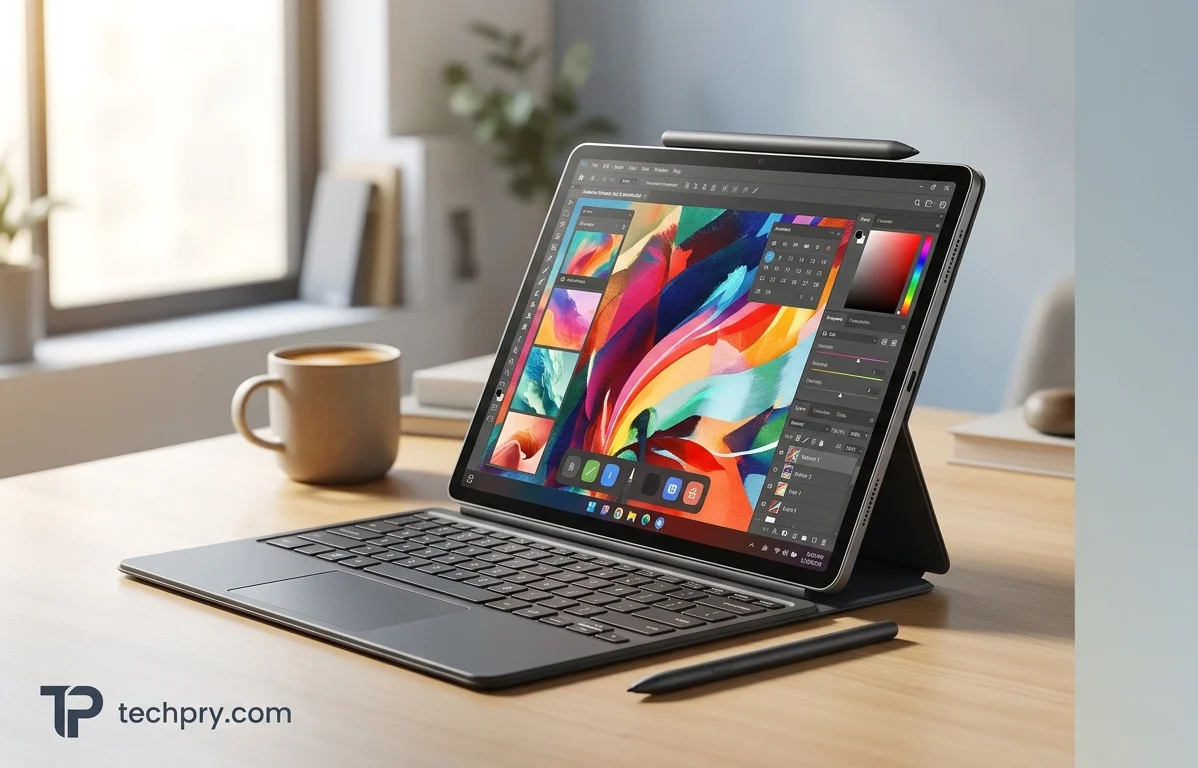
Samsung Galaxy Tab S12 Ultra: Big Screen, Long Battery, Modest Speed Gains
The Tab S12 Ultra earns its recommendation through battery life, size and bundled extras rather than speed, which is why owners of a Tab S10 or S11 are told to wait.
Contents
- Verdict: a top-rated Android productivity tablet with a price to match
- Design and build: a 5.1 mm metal tablet that reviewers call very thin
- Size and weight: 692 g that PCMag lists as a con
- Colors and fingerprint reader: basic finishes, a right-handed sensor
- What's in the box: a stylus and a cable, but no charger
- Display: 14.6 inches, 1848 x 2960 and an adaptive 120 Hz
- Display quality and brightness: punchy color, built for sunlight
- The camera notch: an eyesore to GSMArena, a quirk to PCMag
- Chipset: a 3 nm Dimensity 9500 with an eight-core CPU and a Mali GPU
- Performance: quick for an Android tablet, but only a modest step up from last year
- Benchmarks: ahead of the S11 Ultra, far behind the iPad Pro
- Battery: 11,600 mAh, over 12 hours in PCMag's test and no wireless charging
- Productivity: multitasking, DeX and the keyboard question
- Price and release: $1399 to start, $1,999.99 at the top, on sale October 7
- What changed from last year's Ultra: a faster chip and little else
- Should Tab S10 or S11 owners upgrade? CNET says probably not
- Water and dust resistance: what the rating promises and where reviewers differ
- Cameras: 13 MP and 8 MP on the back, a 12 MP ultrawide up front
- Expandable storage: a memory-card slot that takes up to 2 TB
- Sound: four speakers and no headphone jack
- Connectivity: fast Wi-Fi, Bluetooth 6.0, USB-C and a question mark over 5G
- Software and updates: seven years of OS and security support
The Galaxy Tab S12 Ultra is a tablet you buy for everything around the processor rather than the processor itself. GSMArena calls it the largest tablet on the market. PCMag measured 12 hours 44 minutes of battery life, and a stylus comes in the box. The new chip, though, is only a relatively modest speed bump in CNET's early testing, and the design, display and cameras all carry over from last year. At $1399 to start, the argument for it is stronger for someone replacing an older device than for anyone coming from a recent Samsung tablet.
Verdict: a top-rated Android productivity tablet with a price to match
Reviewers are broadly positive: GSMArena calls the Tab S12 Ultra an excellent, impressive tablet, and PCMag names it the best option for anyone shopping for a high-end, productivity-focused Android tablet, with its Editors' Choice award. PCMag's reasons are the attractive design, a phenomenal display, better battery life than the iPad Pro, the included stylus, the latest Google AI and powerful multitasking tools, and it singles out Samsung's all-inclusive approach. That matches how Samsung pitches the tablet, as a productivity device and a laptop replacement, and the spec sheet files it as a flagship. PCMag still concedes the price is high, and recommends it anyway.
The buyer this points to wants one large screen for multitasking and creative work, and cares more about the included extras than about benchmark leadership. The reasons to skip are just as specific: PCMag lists the laptop-sized dimensions as a con, CNET tells Tab S10 and S11 owners to hold off, and PCMag's benchmark runs put the iPad Pro well ahead on CPU and graphics. Anyone who needs cellular data should check the 5G question before buying, since PCMag lists no 5G option while the spec says 5G is supported.
Design and build: a 5.1 mm metal tablet that reviewers call very thin
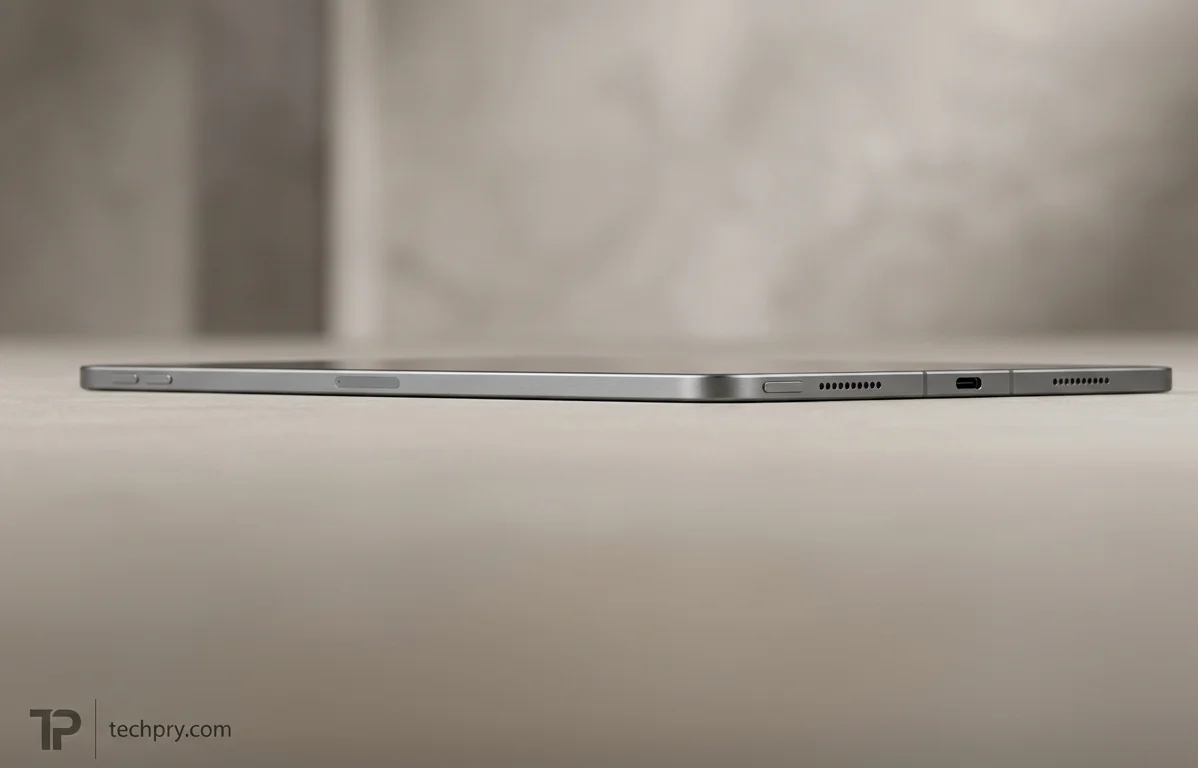
The tablet is 5.1 mm thick, with a metal back and a metal frame. PCMag says the frame is Samsung's , also used on the Galaxy S26 series, and that the front is covered by . GSMArena calls it an ultra-slim metal tablet and PCMag calls the design wildly thin, so both single out how thin it is. PCMag also lists high-quality hardware as a pro and describes the design as attractive, while a reader comment under GSMArena's review simply calls it a beautiful tablet.
None of this is new: the exterior is unchanged from last year's S11 Ultra. That suits buyers who liked that look and offers nothing to anyone hoping for a redesign. PCMag also notes clicky volume and power buttons on the top right.
Size and weight: 692 g that PCMag lists as a con
At 326.3 x 208.5 x 5.1 mm and 692 g, the 14.6-inch Ultra is a big object. GSMArena calls it the largest tablet on the market and PCMag calls it massive and laptop-sized, and PCMag counts those laptop-sized dimensions as a con. Next to the 13-inch , PCMag finds it taller, narrower and heavier but just as slim. At that weight it will spend more time on a desk or lap than in one hand.
For buyers who find it too big, Samsung's 2026 lineup keeps the 14.6-inch Ultra but replaces the 11-inch model with the new 12.6-inch , so the 11-inch size is gone and the Plus is the alternative. One small wrinkle: PCMag gives the width as 8.1 inches, a touch under the spec's 8.21 inches (208.5 mm), a difference too small to change how the tablet handles.
Colors and fingerprint reader: basic finishes, a right-handed sensor
Samsung sells the tablet in silver and gray only, and the gray model has a dark gunmetal finish. PCMag calls the color options pretty basic.
The fingerprint reader sits beneath the display. PCMag found it easy to set up and consistently fast and accurate, but it is placed toward the right side where a right thumb lands, and the reviewer apologizes to left-handed users. On a screen this large, a sensor tied to one side is a small but real ergonomic cost for left-handed owners.
What's in the box: a stylus and a cable, but no charger
The box holds the tablet, a hexagonal and a 3A USB-C cable, but no charger. The spec lists the charger as not included, and GSMArena confirms there is no power adapter. All three reviewers mention the pen, and GSMArena and PCMag both count it as a plus.
The missing adapter stings more than usual here, because PCMag praises Samsung's all-inclusive approach and the tablet starts at $1399. A reader comment under GSMArena's review grumbles that the bundled cable is limited to 3A / 25 W; that is a guess rather than a confirmed limit, since GSMArena itself lists a 3A cable.
Display: 14.6 inches, 1848 x 2960 and an adaptive 120 Hz
The screen is a 14.6-inch Dynamic AMOLED panel, which CNET and PCMag name as , with a resolution of 1848 x 2960 pixels in a 16:10 aspect ratio. The refresh rate tops out at 120 Hz and adapts between 30 and 120 Hz, the panel supports , and the spec lists DCI-P3 color. Resolution, adaptive refresh and peak brightness are all unchanged from last year's model, so the display is a carry-over rather than an upgrade.
Display quality and brightness: punchy color, built for sunlight
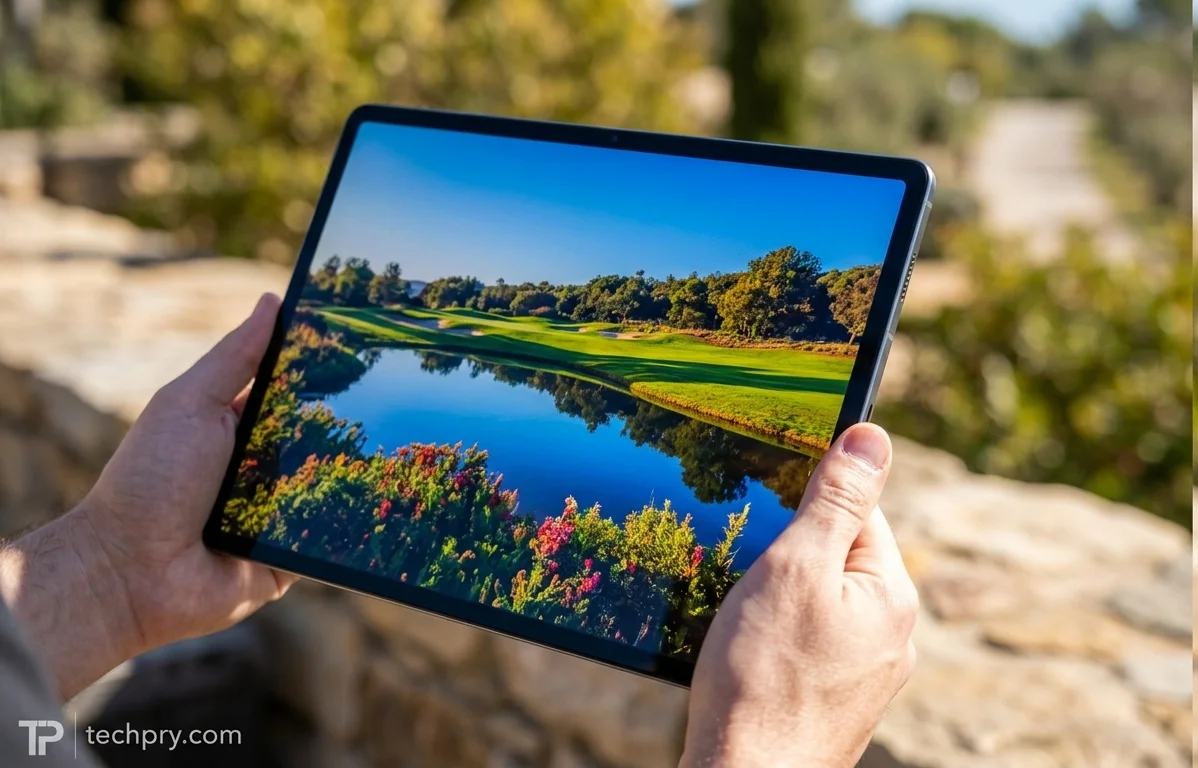
PCMag calls the display phenomenal and luscious, with rich, punchy colors that do not look oversaturated. It also says the size makes the tablet superb for productivity. The 239 ppi density is slightly below the iPad Pro's 264 ppi, which PCMag says should make text a little crisper on Apple's screen, but most eyes will struggle to tell the difference. The detailed praise for color and glare handling comes from PCMag alone.
On brightness, the spec lists 1000 nits maximum rated and 1600 nits in HDR. CNET finds it among the brightest displays it has tested in an Android tablet, though you will not reach peak brightness in regular use, and Samsung says an upgraded adjusts brightness in real time to lighting conditions. PCMag took the tablet outside to check its anti-reflective coating and found the screen cuts through glare without washing out, even in blazing sunlight. CNET's testing and PCMag's sunlight check point the same way: this is a screen you can use outdoors, even if the headline nit figures are not what you see day to day.
The camera notch: an eyesore to GSMArena, a quirk to PCMag
The display keeps a notch for the front camera, and all three reviewers mention it. GSMArena calls it relatively small but still an unfortunate eyesore, while PCMag calls it a subtle quirk you spot in landscape mode, where the selfie camera dips slightly into the display. CNET simply notes the notch is still there. The split is about tolerance, not size, since both describe the same small cutout, and Samsung has once again kept it, so anyone bothered by it gets no relief this year.
Chipset: a 3 nm Dimensity 9500 with an eight-core CPU and a Mali GPU
The tablet is powered by the , which TSMC manufactures on a 3 nm process. Its eight CPU cores use a 1 + 3 + 4 layout: one C1-Ultra core at 4.21 GHz, three C1-Premium cores at 3.5 GHz and four C1-Pro cores at 2.7 GHz, backed by 16 MB of L3 cache and a MediaTek NPU 990. Graphics come from the , with 1536 shading units running at 1716 MHz for roughly 5271.5 GFLOPS. The NPU line matters most for what follows, because that is where the largest generational gain is claimed.
Performance: quick for an Android tablet, but only a modest step up from last year
PCMag calls the performance ultra quick for an Android slate, describing the chip as a step up from the in the S11 Ultra. CNET is more restrained: the speed improvement over the S11 Ultra is relatively modest, with the biggest gains in AI processing.
The headline figures GSMArena and CNET repeat are about 19% faster CPU performance, about 17% on the GPU and up to 61% on the NPU compared with that earlier chip. CNET says some of its early benchmark numbers were close to the ones Samsung cites, but the tablet only feels a tad peppier in use. The AI claim is where promise and experience part: CNET found AI tasks not always as fast as hoped, with animating a static image still taking a good 45 seconds or so.
On paper the new chip is clearly faster, but because the screen, thickness and cameras stayed put, the speed bump is close to the only thing that changed for daily use, and CNET calls it modest.
Benchmarks: ahead of the S11 Ultra, far behind the iPad Pro
On , the spec lists 3311 single-core and 10075 multi-core, while PCMag's own run produced 3,305 and 10,146, so the two land close together. PCMag's results beat the S11 Ultra but fall way behind the iPad Pro.
| Test | Tab S12 Ultra (PCMag run) | S11 Ultra | iPad Pro |
|---|---|---|---|
| Geekbench 6 single-core | 3,305 | 2,773 | 4,141 |
| Geekbench 6 multi-core | 10,146 | 9,091 | 15,490 |
| 3DMark Wild Life Extreme | 5,907, 35.38 fps average | - | 10,929 |
In graphics, PCMag ran and recorded an overall score of 5,907 at an average of 35.38 frames per second, while the iPad Pro delivered 10,929, and PCMag says the iPad Pro dominated this test. The spec sheet adds an AnTuTu 11 total of 3598931 and a GPU compute score of 22504, which are most useful for comparing against other tablets listed on the same tests.
The pattern is consistent across CPU and graphics: the multi-core gap to the iPad Pro is much larger than the improvement over last year's chip, so Samsung has refined its tablet rather than closed in on Apple. For multitasking, drawing and media that gap may matter less, and PCMag still names the Samsung its best option despite the numbers.
Battery: 11,600 mAh, over 12 hours in PCMag's test and no wireless charging
The tablet has an 11,600 mAh battery and charges at up to 45 W over a cable; the spec lists 39% in 30 minutes and a full charge in about 1 hour 33 minutes, and there is no wireless charging. PCMag measured 12 hours 44 minutes in its battery test and lists more than 12 hours of battery life as a pro, saying it beats the iPad Pro. CNET's preliminary battery test came in close to the S11 Ultra's result, but a little short.
Read together, the two results say the battery is strong in absolute terms but not better than last year's: PCMag's number is an endorsement, while CNET's early test suggests the new chip has not stretched endurance. The charging figures also come with a catch, since there is no adapter in the box, so reaching 45 W means supplying a charger that can deliver it.
Productivity: multitasking, DeX and the keyboard question
PCMag praises the powerful multitasking tools and says the tablet doubles as an on-the-go creative workstation. GSMArena and CNET both point to , Samsung's desktop-style interface, which CNET says the company continues to refine. The big canvas is what gives those tools room, and PCMag says the display size makes the tablet superb for productivity.
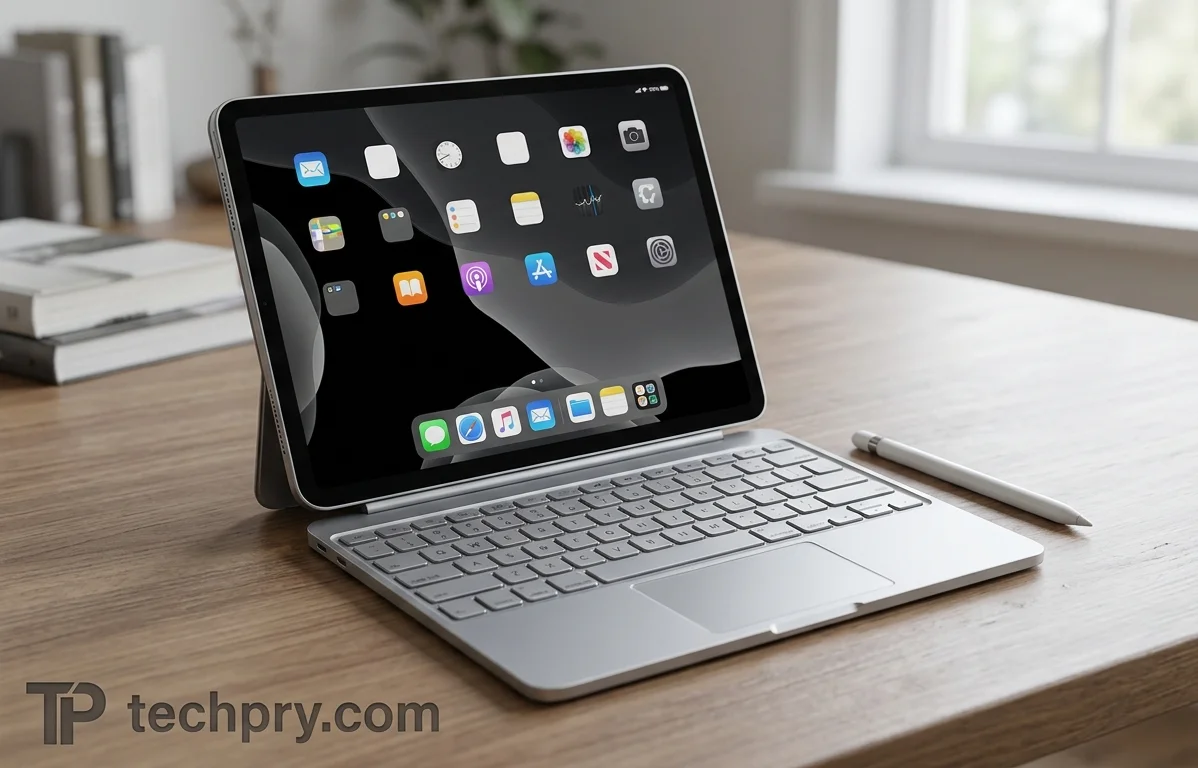
Keyboards are where the laptop pitch gets tested. The costs $399, has an aluminum finish, a built-in trackpad and a Galaxy AI Key that opens access to AI assistants. CNET says it makes you feel like you are using a laptop, but also calls it pricey and notes that it protects only the screen when closed, leaving the back exposed. The protects both the front and back when closed, and CNET says it may be discounted at launch as part of a bundle with a Tab S12. Samsung also makes a slim Book Cover case, cheaper third-party cases are widely available, and the bottom edge has two small attachment points for accessories such as a keyboard cover.
That $399 sits on top of a tablet that already starts at $1399, and it leaves the back of a 5.1 mm tablet uncovered. Anyone who carries the tablet daily should weigh that protection gap, and the Slim cover, which wraps front and back, is the one that closes it.
Price and release: $1399 to start, $1,999.99 at the top, on sale October 7
The US starting price is $1399 for the base model, which pairs 12 GB of RAM with 256 GB of storage. Two higher tiers exist, and the tablet tops out at 16 GB of RAM and 1 TB of storage.
| Configuration | US price |
|---|---|
| 12GB RAM / 256GB (base) | $1399 |
| 12GB / 512GB | $1,599.99 |
| 16GB / 1TB | $1,999.99 |
Outside the US, starting prices as of September 30, 2026 were £1,399 in the UK and €1,569 in Europe. GSMArena's retailer table lists current offers for the base model of $1,590.00 and €1,539.00; those are offers rather than the MSRP, and the dollar figure sits above the $1399 list price, so the sticker is not a guarantee of what a given store will charge.
The sources split on how much the price rose: CNET calls the US starting price a $200 increase from the S11 version, while PCMag says the tablet costs $100 more than its predecessor. Both cannot describe the same comparison, so treat the real step-up as somewhere between $100 and $200 until you price a specific configuration. PCMag acknowledges the price is high. Because a memory-card slot takes cards up to 2 TB, the larger tiers make the most sense if you need the 16 GB of RAM in the top tier or want more internal capacity, rather than just room for media.
Samsung announced the tablet in September 2026 and released it in October 2026, on October 7 in the US and other major markets. As of September 30, 2026, SamMobile noted the release may be staggered, so some markets could receive the tablet after that date.
What changed from last year's Ultra: a faster chip and little else
Compared with the , the headline upgrade is the chip: the Dimensity 9500 replaces the Dimensity 9400+, with about 19% faster CPU performance, 17% on the GPU and up to 61% on the NPU. GSMArena adds that the updated chipset comes with enhanced cooling, the spec lists a , and GSMArena also mentions an upgraded connectivity suite.
What stayed the same, and what costs more:
- Exterior design: unchanged.
- Display resolution, adaptive refresh rate and peak brightness: unchanged.
- Camera hardware: unchanged.
- US starting price: higher by $200 according to CNET, $100 according to PCMag.
That is a refresh under the surface. The things people notice first, such as thickness, screen and cameras, are the same, so the chip's gains, which CNET calls relatively modest, carry most of the argument, and the higher starting price takes some of it back.
Should Tab S10 or S11 owners upgrade? CNET says probably not
Probably not: CNET advises owners of a Tab S10 or S11 to hold off, because rising component and tablet prices have made trade-in values less enticing than they used to be for two- or three-year-old Galaxy Tab S models. The rest of the evidence points the same way: CNET sees the speed bump over the S11 Ultra as relatively modest, the exterior design is unchanged, and CNET puts the US starting price $200 above the S11 version. The strongest argument for moving would be AI-heavy work, where the gains are largest, though CNET still waited around 45 seconds on an AI image animation.
Water and dust resistance: what the rating promises and where reviewers differ
The tablet is rated for dust and water resistance. GSMArena calls it one of the few tablets on the market with that rating, and PCMag notes the iPad Pro lacks the certification and lists dust and water resistance as a pro.
Where the reviewers part ways is the submersion limit: CNET says up to 1 meter of water for 30 minutes, while PCMag says about five feet for 30 minutes. Five feet is deeper than a meter, and the rating itself leaves the depth to the manufacturer to specify, so lean on the lower figure if you plan to rely on it. In daily use the rating is better read as protection from spills and rain than as a reason to dunk a 14.6-inch tablet.
Cameras: 13 MP and 8 MP on the back, a 12 MP ultrawide up front
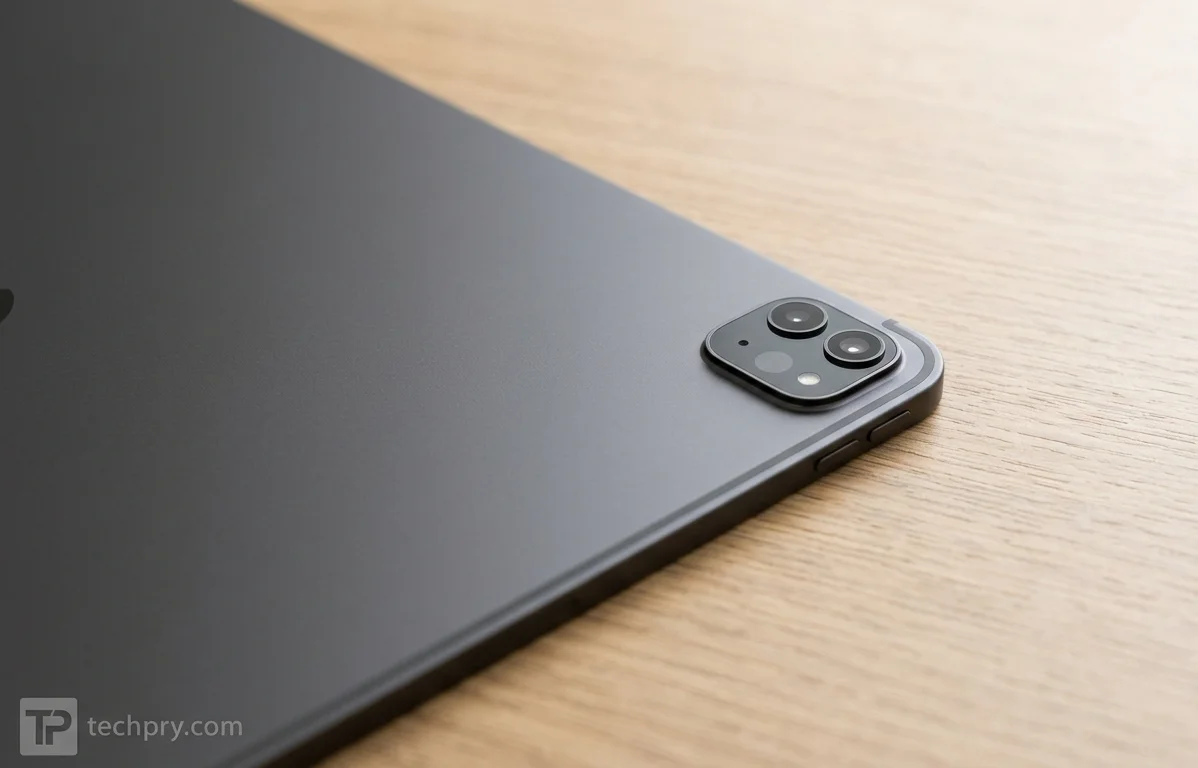
The back has a 13 MP standard lens and an 8 MP ultrawide lens, set in the top-right corner of the rear panel, and the front camera is a 12 MP ultrawide. The spec lists 4K video recording at up to 60 FPS, and Samsung kept the camera hardware from the S11 Ultra.
Cameras are not the reason to buy this tablet: PCMag's stated reasons for recommending it run through design, display, battery, stylus, software and multitasking, and do not include the cameras. The front ultrawide is the one most people will use, for video calls, and it is the one that sits in the notch discussed above.
Expandable storage: a memory-card slot that takes up to 2 TB
A slot on the top left edge accepts cards up to 2048 GB, or 2 TB. PCMag says it loves to see the slot and points out that the iPad offers nothing similar. With 256 GB of internal UFS 4.0 storage in the base model, the slot is likely the cheaper way to keep large media libraries and archives on board than buying a higher internal tier.
Sound: four speakers and no headphone jack
The tablet has four speakers in a 4.0 configuration with support. Samsung says the sound now features four-channel spatial audio, twice as many channels as the previous generation, and PCMag notes two speaker grilles, one on each side. The spatial-audio improvement is Samsung's pitch as relayed by CNET, so treat it as a claim rather than a tested result. There is no headphone audio jack, so wired headphones need an adapter on the USB-C port, and Bluetooth 6.0 covers wireless ones.
Connectivity: fast Wi-Fi, Bluetooth 6.0, USB-C and a question mark over 5G
The spec lists , Bluetooth 6.0 and a USB Type-C port running USB 3.2, and GSMArena notes an upgraded connectivity suite compared with the previous generation. For mobile data, the spec lists one SIM slot plus eSIM support and says 5G is supported.
PCMag disagrees on the last point: it lists no 5G cellular option as a con, which directly contradicts the spec. That leaves the 5G question open, because one of three reviewers contradicts the spec and a SIM slot with eSIM support alone does not prove a given unit has 5G. If mobile data matters to you, confirm the specific variant in your market before paying.
Software and updates: seven years of OS and security support
The tablet ships with built on . GSMArena describes the software as packed with AI features, and CNET notes a free six-month trial of . Samsung promises 7 years of OS updates and 7 years of security updates, the same commitment as the Tab S10 and Tab S11 series, so the policy is a reason to keep the tablet for a long time rather than a new reason to upgrade.
On a $1399 tablet the update window matters because it sets how long the price can be spread over useful life, while the six-month AI trial is a short-term perk, not a permanent bundle.
Comments 0
Please log in or sign up to comment.